
Planting
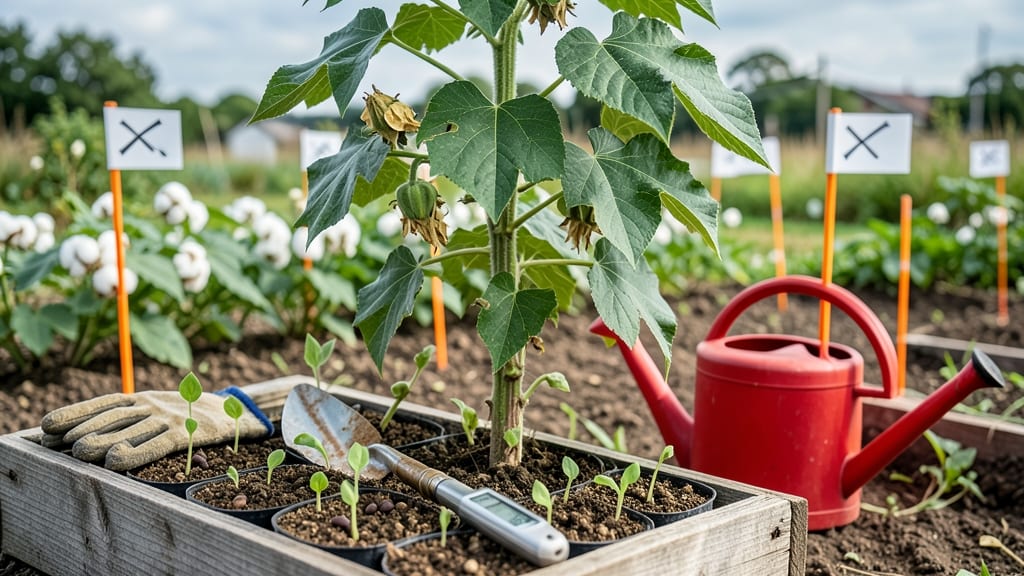
If you're growing cotton in Texas, when to plant cotton in the state is critical—and one wrong move could mean lost yield or pest problems before you even see those fluffy bolls.
The 🧵 plant thrives when planted after the last frost but before the heat of summer, but Texas' varied climate means your neighbors in North Texas might be planting while South Texas farmers are already harvesting.
For most of the Lone Star State, the sweet spot falls between March and May, but that window shifts depending on whether you're in the Panhandle or the Rio Grande Valley.
Soil temperature plays a bigger role than you might think—cotton seeds need to hit at least 60°F just a few inches below the surface to germinate properly.
Here’s what you need to know: regional frost dates, how to prep your soil for maximum germination, and why waiting too long could leave your crop vulnerable to Texas’ infamous summer pests. Let’s break it down so you can avoid common mistakes and set your cotton up for success.
Whether you're a first-time gardener or a seasoned farmer, these Texas-specific tips will help you align your planting schedule with the climate—so you can enjoy a bountiful harvest instead of a frustrating gamble. Ready to get started?
Texas cotton planting dates by region: soil temperature & frost deadline rules
Timing your cotton planting in Texas isn't just about the calendar—it's about soil temperature, frost dates, and USDA hardiness zones. In our experience, cotton thrives when planted after the last frost but before soil temperatures hit 60-65°F at 4-inch depth.
This window varies dramatically from North Texas to the Gulf Coast, where microclimates create unique challenges.
For North Texas (USDA Zones 8a-8b), the last frost typically lands between February 15 and March 15. This means your planting window opens around mid-March to early April. Wait too long, and you risk summer heat stress before bolls mature.
Meanwhile, Central/East Texas (Zones 8b-9a) enjoys earlier planting, starting as soon as late February, with ideal conditions through April.
In South Texas (Zones 9a-10b), you can plant as early as January, but our team recommends waiting until February to avoid early-season pests like aphids. The key is always soil temperature—never plant when nighttime temps dip below 50°F, or you'll stunt germination.
Visual Element: Comparison Table
| Region | USDA Zone | Last Frost | Planting Window | Soil Temp Threshold |
|---|---|---|---|---|
| North Texas | 8a-8b | Feb 15-Mar 15 | Mid-March to early April | 60-65°F (4" depth) |
| Central/East Texas | 8b-9a | Feb 1-Mar 1 | Late Feb to April | 60-65°F (4" depth) |
| South Texas | 9a-10b | Jan 15-Feb 15 | February to early March | 60-65°F (4" depth) |
Pro tip: Use a soil thermometer to confirm readiness. We’ve seen delayed germination when planting too early in North Texas because cool soils slow seedling development. For faster results, consider transplanting seedlings after they’ve developed 2-3 true leaves—this buys you critical time in shorter growing seasons.
Texas A&M Extension recommends direct sowing cotton after all danger of frost has passed, but transplanting can extend your window by 2-3 weeks. Start seeds indoors 8-10 weeks before your region’s last frost date using biodegradable pots to avoid transplant shock.
Our team once lost a batch of seedlings to damping off because we reused plastic pots—don’t make that mistake!
One common misconception is that later planting equals higher yields. Not true! Cotton planted after May 15 in North Texas often struggles to mature before first frost (Nov 15-Dec 15). In Central Texas, aim to finish planting by late April to ensure 150-180 frost-free days for full boll development.
For Gulf Coast growers, the real challenge is humidity and pests. Planting too early can invite boll weevils or root rot. We recommend covering young plants with floating row covers until they reach 12 inches tall to deter early infestations.
In the Panhandle, where drought is a constant threat, prioritize drought-tolerant varieties like FM 966 B2RF and plant near drip irrigation lines.
Remember: Cotton’s growth rate accelerates once soil temps exceed 70°F. In South Texas, this happens by mid-March, while North Texas may not see these temps until late April.
Use this to your advantage—plant early varieties in cooler regions and longer-season types in the South for extended harvests.
Finally, keep a planting journal to track your region’s unique patterns. Note when soil warms, when first flowers appear, and how pests respond to your timing. After three years of records, you’ll spot trends that let you fine-tune your schedule like a pro. Happy planting!
Texas cotton planting dates by region: soil temperature & frost deadline rules
Planting cotton in Texas hinges on two critical factors: soil temperature and frost dates. Cotton seeds need 60-65°F soil at 4-inch depth to germinate, while last frost dates vary dramatically across the state.
In North Texas (USDA Zones 8a-8b), wait until mid-March to April after the average February 15-March 15 frost has passed. Meanwhile, Central/East Texas (Zones 8a-9a) can start as early as late February when soil warms.
For South Texas (Zones 9b-10b), the window opens even earlier—January to early March—thanks to milder winters. However, Panhandle growers in Zone 8a must play it safe, delaying until late April to avoid late frosts.
Always verify your local Texas A&M AgriLife Extension frost maps, as microclimates can shift planting windows by weeks.
| Region | USDA Zone | Last Frost Date | Ideal Planting Window | Soil Temp Threshold |
|---|---|---|---|---|
| North Texas | 8a-8b | Feb 15 - Mar 15 | Mid-March to April | 60-65°F (4" depth) |
| Central/East Texas | 8a-9a | Feb 1 - Mar 1 | Late Feb to April | 60-65°F (4" depth) |
| South Texas | 9b-10b | Jan 15 - Feb 15 | Jan to early March | 58-62°F (4" depth) |
| Panhandle | 8a | Mar 1 - Mar 15 | Late April | 65°F+ (4" depth) |
Pro tip: Use a soil thermometer to confirm readiness—cold soil delays germination by weeks. In East Texas, where humidity spikes in summer, plant early March to avoid boll rot from prolonged wet conditions.
Meanwhile, West Texas growers should prioritize drought-resistant varieties like 'STV 825' and plant by April 15 to escape summer's brutal heat.
Don't overlook transplanting dates. Seedlings take 4-6 weeks to establish, so schedule transplants to finish by May 1 in North Texas or April 15 in South Texas. Late plantings risk shorter fiber quality and lower yields.
For home gardeners, start seeds indoors 8-10 weeks before last frost using heat mats to mimic Texas soil temps.
Remember: Texas cotton thrives with 240+ frost-free days. If your region has fewer, opt for early-maturing varieties like 'FM 966 B2RF' (120-day cycle). Always check Texas A&M's Cotton Planting Guide for updates on pest pressures like boll weevils, which surge after early plantings.
For container growing, extend your season by planting 4-6 weeks later—containers warm faster but dry out quicker. Mulch with straw to maintain soil moisture and temps. And if you're in South Texas, consider fall plantings (August-September) for a second crop, though yields may drop without proper care.