
Trees
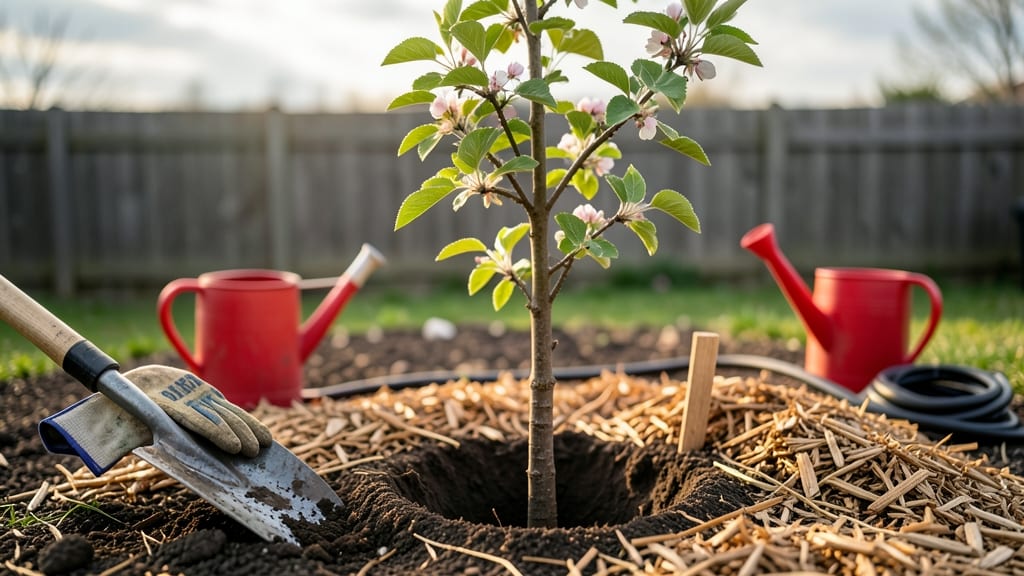
Planting an apple tree 🍎 in Arkansas at the wrong time could mean years of struggling with poor growth or even losing your investment—especially when you factor in the state's strict chill-hour requirements.
Unlike other plants, these trees need just the right balance of cold and warmth to thrive, and Arkansas' 7a-8b zones add another layer of complexity.
If you're dreaming of a homegrown orchard, timing is everything. Plant too early, and frost could damage delicate roots. Too late, and your tree might struggle to establish itself before summer heat sets in.
The sweet spot? Late winter to early spring—when soil temperatures rise but the risk of extreme cold has passed.
Here's the good news: with the right variety and preparation, you can grow thriving apple trees that produce fruit year after year. I'll walk you through Arkansas-specific tips, from selecting varieties that match your local chill hours to preparing your soil for maximum success.
Let's get your orchard off to the best possible start—because the difference between a struggling sapling and a productive tree often comes down to when you put it in the ground.
Best planting months in Arkansas by chill-hour zone
Arkansas spans three chill-hour zones, ranging from 500 to 1,000 hours below 45°F, which dramatically impacts when—and which—apple trees you can plant successfully. The Northern Highlands (USDA 7a) needs 800+ chill hours, while the Delta and Ouachitas (USDA 8a-8b) thrive with 500-600 chill hours.
Planting at the wrong time risks frost damage or poor fruit set.
For bare-root trees, the ideal window is November through March, when soil is cool but workable. Container-grown trees can go in slightly later, up to April, but avoid summer heat stress.
My top recommendation? Plant in February or early March—this gives roots time to establish before spring growth begins.
Here’s how Arkansas’ zones break down for planting:
| Zone | Chill Hours | Best Planting Months | Recommended Varieties | Avoid Planting After |
|---|---|---|---|---|
| Northern Arkansas (USDA 7a) | 800–1,000 | February–March | Fuji, Gala, Pink Lady | April 15 |
| Central Arkansas (USDA 7b) | 600–800 | January–March | Jonagold, Honeycrisp | April 1 |
| Southern Arkansas (USDA 8a-8b) | 500–600 | November–February | Ein Shemer, Akane | March 15 |
If you’re in Northern Arkansas, prioritize high-chill varieties like Honeycrisp or Granny Smith. For the southern half, low-chill cultivars such as Anna or Dorsett Golden are your best bet.
I once planted a Gala in Hot Springs—it barely survived because the variety needed 1,000 chill hours, but the region only averages 650.
Pro tip: Check your local USDA zone using the Arkansas Agricultural Extension Service map. Even a 50-mile difference can shift your chill hours by 100+ hours. For example, Fayetteville (Zone 7a) can handle Fuji, while El Dorado (Zone 8a) should stick to Akane.
Timing also depends on whether you’re planting bare-root or container-grown trees. Bare-root trees need moist but not soggy soil—plant them as soon as they arrive if the ground isn’t frozen. Container-grown trees are more flexible but still benefit from early spring planting to avoid heat stress.
One mistake I see often? Planting in late March or April when soil temperatures rise. Apple roots struggle in heat, leading to transplant shock.
Aim for 50–60°F soil temps—use a soil thermometer if you’re unsure. In southern Arkansas, this might mean planting in January instead of February.
Finally, don’t forget last frost dates. While Arkansas’ average last frost is February 15, microclimates near rivers or valleys can delay frost by 2–3 weeks. Plant 2–4 weeks before your local last frost date to give roots a head start.
For example, Bentonville might plant in late January, while Little Rock waits until early February.
For container-grown trees, you have a slightly longer window—up to April—but prioritize morning shade during the first few weeks to reduce stress. Mulch heavily with wood chips to retain moisture and regulate soil temperature.
🌱
How to match apple tree varieties to Arkansas’ microclimates
Arkansas’ diverse climate—from the cooler Ozark Mountains to the warmer Delta region—means not all apple varieties thrive equally. The key is selecting trees that match your chill-hour zone (500–1,000 hours) and soil conditions.
Southern Arkansas, for example, often struggles with low-chill varieties, while northern areas can support traditional cultivars like Fuji or Gala.
Start by testing your chill hours using a weather station or local extension office data. Southern Arkansas (USDA zones 7b–8a) typically needs 300–500 chill hours, while northern regions (7a) can handle up to 1,000+ hours.
For the Delta region, varieties like ‘Ein Shemer’ or ‘Anna’ are ideal due to their low chill requirements.
Soil prep is equally critical. Arkansas’ clay-heavy soils drain poorly, so amend with compost or sand to improve aeration. Test your soil’s pH—apple trees prefer 6.0–7.0. If your soil is acidic, add lime before planting. For container-grown trees, use a well-draining potting mix with perlite.
🌱 Step-by-Step Variety Matching Guide
- Southern Arkansas (300–500 chill hours): Choose ‘Akane’ or ‘Dorsett Golden’—both tolerate heat and require fewer chill hours.
- Northern Arkansas (700–1,000 chill hours): Opt for ‘Honeycrisp’ or ‘Jonagold’, which thrive in cooler climates.
- Mountain Regions (High Elevation): Plant ‘Granny Smith’ or ‘McIntosh’ for crisp, cold-resistant fruit.
- Container Planting: Select dwarf varieties like ‘Liberty’ (disease-resistant) or ‘Zestar!’ series for urban gardens.
When selecting rootstock, consider your space and goals. Dwarf rootstock (e.g., M.9) is perfect for small yards, while semi-dwarf (e.g., MM.106) works for larger properties. Avoid seedling rootstock—it’s less predictable and harder to manage in Arkansas’ variable climate.
After planting, prioritize mulching with wood chips to retain moisture and regulate soil temperature. Water deeply once weekly during dry spells, focusing on the root zone. In Arkansas’ humid summers, watch for fire blight—prune infected branches immediately and sterilize tools with rubbing alcohol.
For pollination, plant at least two compatible varieties (e.g., ‘Gala’ + ‘Fuji’) unless you choose self-pollinating types like ‘Anna’. In Arkansas’ warm winters, some varieties may bloom early—protect blossoms from late frosts with frost cloth if needed.