
Plants
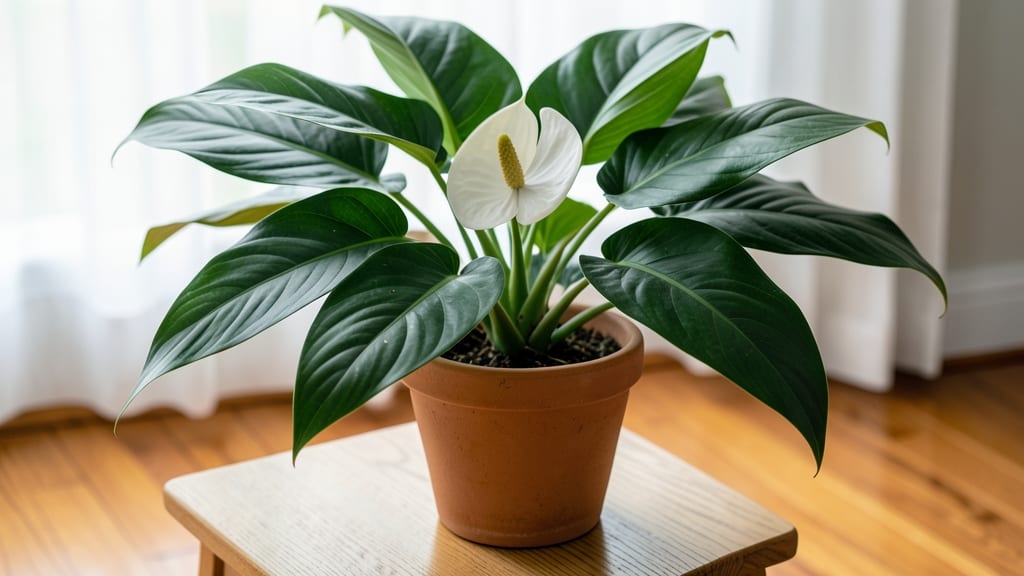
Peace lily light requirements: ideal sunlight conditions explained
Peace lilies (Spathiphyllum) are famous for thriving in low-light conditions, making them perfect for offices, bathrooms, or dimly lit corners. However, they still need bright, indirect sunlight to produce those iconic white blooms and maintain healthy foliage.
The key is finding that sweet spot between too little light (which causes slow growth) and too much direct sun (which burns leaves).
In my experience, the ideal light range for a peace lily is 2-4 hours of indirect sunlight per day. This could mean placing it 3-6 feet away from a north-facing window, where the light is naturally softer.
East-facing windows also work well, especially in the morning when sunlight is gentler. Avoid south- or west-facing windows unless you’re using a sheer curtain to diffuse the intensity.
Many people mistakenly believe peace lilies need bright light like succulents or tropical plants. While they can tolerate some brighter conditions, direct sunlight—especially in summer—can scorch their leaves, leading to crispy brown edges. Think of them as shade-loving plants with a touch of brightness, not full-sun lovers.
Here’s how to visualize the perfect setup: Imagine your peace lily sitting on a dresser near a north window, where it gets dappled light from nearby trees or buildings.
If your home lacks natural light, don’t worry—we’ll cover artificial solutions later! The goal is to mimic the filtered light of their native understory habitats in tropical rainforests.
| Light Condition | Ideal Placement | Effects on Plant |
|---|---|---|
| Low Light (<2 hrs indirect) | Bathroom, hallway, or far from windows | Slow growth, fewer blooms, leggy stems |
| Ideal (2-4 hrs indirect) | North window, 3-6 ft away; east window with curtain | Healthy foliage, frequent blooms, compact growth |
| Bright Indirect (4+ hrs) | West window with sheer curtain; bright room | Risk of leaf burn; may need more humidity |
| Direct Sunlight | South window without filter; outdoor summer sun | Brown leaf tips, crispy edges, stress |
Seasonal adjustments are crucial, especially if you notice your peace lily struggling during winter or summer. In winter, when natural light is weaker, you might need to rotate the plant every few weeks to ensure even exposure.
Conversely, in summer, if you notice leaves turning yellow near a sunny window, move it back 1-2 feet or add a light curtain to diffuse the intensity.
Pro tip: If your peace lily isn’t blooming, it might need a slightly brighter spot—just not direct sun. These plants often respond to increased indirect light by producing more flowers, though they’ll never be as prolific as they would in their natural habitat.
Think of blooms as a bonus, not a requirement for their health!
For those with multiple peace lilies, I recommend testing different spots in your home. Label each pot with its location (e.g., "North Window – 4 hrs") and track growth over 4-6 weeks.
You’ll quickly see which setup works best for your specific lighting conditions. Consistency is key—peace lilies hate sudden changes, so gradual adjustments are always safer.
Remember, peace lilies are forgiving plants, but they’ll always tell you when they’re unhappy. Watch for drooping leaves (underwatering or low light) or brown patches (too much sun). With the right light balance, your peace lily will reward you with glossy leaves and occasional blooms for years to come.
Signs your peace lily isn’t getting enough (or too much) light
Your peace lily’s leaves speak volumes about its light conditions. If the edges turn brown or the foliage yellows and drops, it’s often a cry for help—either too much direct sunlight or not enough indirect light.
These visual cues are your plant’s way of communicating its needs before more serious damage occurs.
When a peace lily lacks sufficient bright indirect light, its leaves may lose their glossy finish and appear dull. The plant might also stop blooming entirely, as flowering requires more energy than it can generate in dim conditions.
This is especially common in north-facing rooms or spaces far from windows.
On the flip side, too much direct sunlight causes leaf scorch, visible as crispy, brown patches along the edges. The leaves may also curl or wilt as the plant tries to protect itself from harsh rays.
If you notice these signs, it’s time to adjust your peace lily’s location or add a sheer curtain to diffuse the light.
Another red flag is slow growth. If your peace lily isn’t producing new leaves or its stems are stretching unnaturally (a condition called etiolation), it’s reaching for light. This elongated growth weakens the plant and makes it more susceptible to pests or disease.
🚨 Warning: Common Light Mistakes
Mistake 1: Placing near a south-facing window without shade → Leaf burn risk.
Mistake 2: Ignoring seasonal light changes → Winter sluggishness or summer stress.
Mistake 3: Assuming artificial light replaces natural light entirely → Use grow lights as supplements, not replacements.
If your peace lily shows signs of light stress, act quickly but gently. Move the plant to a brighter spot gradually—sudden changes can shock it. For overly bright conditions, use a light-colored curtain or sheer fabric to filter the sun.
In dimly lit rooms, consider a south- or east-facing window or a grow light for 6-8 hours daily.
Pay attention to the soil moisture too—plants in low light often need less frequent watering because their growth slows. Always check the top inch of soil before watering to avoid over-saturating a stressed plant.
With the right light balance, your peace lily will bounce back with vibrant green leaves and even reward you with those iconic white blooms.