
Plants
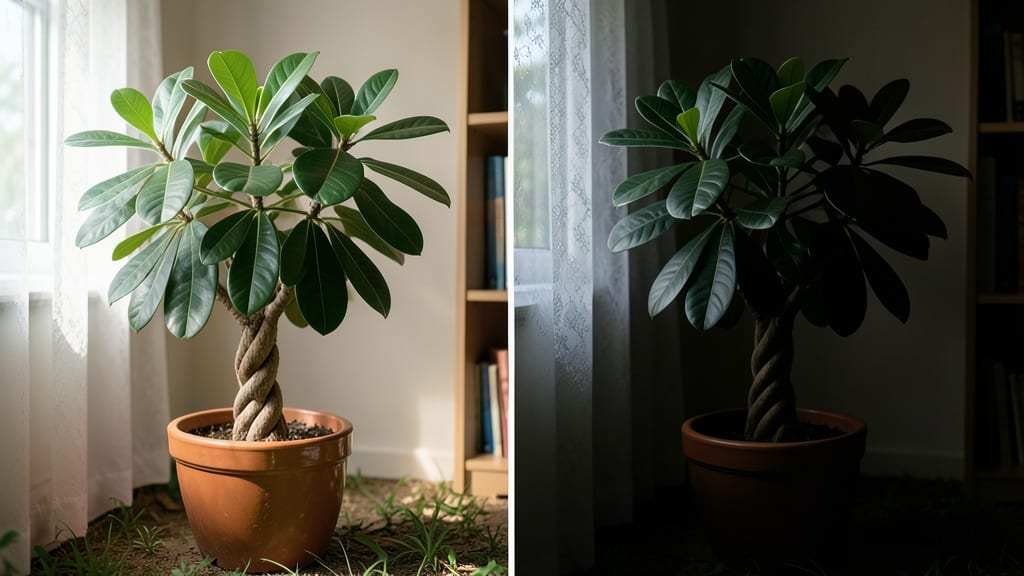
Understanding money tree light requirements: low to bright indirect sunlight explained
The money tree (Pachira aquatica) thrives in bright, indirect sunlight, making it perfect for indoor spaces with natural light. Unlike sun-loving plants, it can't handle harsh direct rays, which can scorch its leaves.
Instead, think of it as a plant that enjoys gentle morning sunlight or filtered light from sheer curtains.
This tropical beauty actually tolerates low-light conditions better than many houseplants, but it won't grow as vigorously. The key is finding that sweet spot where it gets enough light to stay healthy without being stressed by too much intensity. Most homes achieve this near east or north-facing windows.
If you're using artificial grow lights, opt for full-spectrum LEDs placed about 12-18 inches above the plant. These should be on for 12-14 hours daily to mimic natural daylight cycles. The money tree's adaptability makes it ideal for offices or rooms with limited natural light.
Here's what happens when light conditions are off:
| Light Condition | Plant Response | Solution |
|---|---|---|
| Too little light | Leggy growth, pale leaves, slow growth | Move closer to window or use grow lights |
| Direct sunlight | Brown leaf tips, crispy edges, sunburn | Use sheer curtains or move 3-4 feet away |
| Ideal indirect light | Dark green leaves, compact growth, healthy trunk | Maintain current placement or rotate occasionally |
| Fluorescent lighting | Slow growth but stable health | Supplement with grow lights for better growth |
One common misconception is that money trees need direct sunlight like succulents. In reality, they're much more forgiving. I've seen money trees thrive in offices with only fluorescent lighting, though they'll grow faster with natural light.
The secret is observing your plant's leaves - if they're dark green and glossy, you're likely in the ideal range.
For seasonal adjustments, remember that winter light is weaker. If you notice your money tree slowing down in winter, consider moving it to a brighter spot or adding a small grow light. This is especially important in northern climates where natural light is limited during winter months.
Pro tip: Rotate your money tree quarter-turns every 2-3 weeks to ensure even light exposure. This prevents one side from getting too much light while the other stays in shade. The goal is uniform growth where all leaves receive similar light conditions.
If you're unsure about your home's light conditions, try this simple test: Place your hand near potential spots. If you can comfortably read a book with the light shining on your hand, it's likely the right intensity for your money tree.
Avoid areas where the light feels harsh or creates sharp shadows.
Remember that money trees are forgiving plants. Even if you accidentally give it too much light, it'll recover with proper care. The key is consistency - maintain stable light conditions and your money tree will reward you with lush, vibrant growth for years to come. 🌿
Understanding money tree light requirements: low to bright indirect sunlight explained
The money tree (Pachira aquatica) thrives in bright, indirect sunlight, making it perfect for indoor spaces. Unlike sun-loving plants, it avoids harsh direct rays that can scorch its leaves.
Think of it as a plant that enjoys morning sun or filtered light through sheer curtains—ideal for east-facing windows or 2-3 feet from a north-facing window.
This tropical beauty adapts well to low-light conditions, but growth slows dramatically. While it can survive in dim corners, its leaves may become sparse or pale. The sweet spot? 4-6 hours of bright, diffused light daily. This balance ensures lush foliage and steady growth without stressing the plant.
🌱 Money Tree Light Requirements Summary
| Light Type | Ideal Conditions | Effects of Too Much/Little |
|---|---|---|
| Bright Indirect | 4-6 hours daily (e.g., east/west windows) | Healthy growth, vibrant leaves |
| Low Light | Survives in dim corners (e.g., north windows) | Slow growth, sparse leaves |
| Direct Sun | Avoid south-facing windows | Brown leaf tips, scorched foliage |
Pro Tip: Rotate your plant quarterly to ensure even light exposure for balanced growth.
If your home lacks natural light, grow lights are a game-changer. A simple LED grow bulb (5000K-6500K) placed 12-18 inches above your money tree mimics natural sunlight. Run it for 12-14 hours daily to replicate a full day cycle. This works wonders in basements or offices with minimal windows.
Outdoor enthusiasts can enjoy their money tree in partial shade during summer months. Place it under a dappled canopy or near a building’s shadow to protect it from intense afternoon sun. Just remember: avoid sudden light changes, like moving from indoors to full sun, which can shock the plant.
Watch for leaf color shifts as your first clue about light needs. Dark green leaves with a slight sheen indicate perfect lighting, while yellowing or browning signals stress. Adjust placement gradually—move your plant a few inches closer or farther from the window weekly until you find the sweet spot.
For urban apartments or small spaces, reflective surfaces like mirrors or white walls can amplify natural light. Place your money tree near these surfaces to boost brightness without direct sun exposure. This trick works especially well in west-facing rooms where afternoon light is softer.
Remember, every money tree is unique. What works for one may need tweaking for another. Start with moderate indirect light, observe your plant’s response, and adjust as needed.
With the right lighting, your money tree will reward you with thick, glossy leaves and steady growth for years to come. 🌿