
Trees
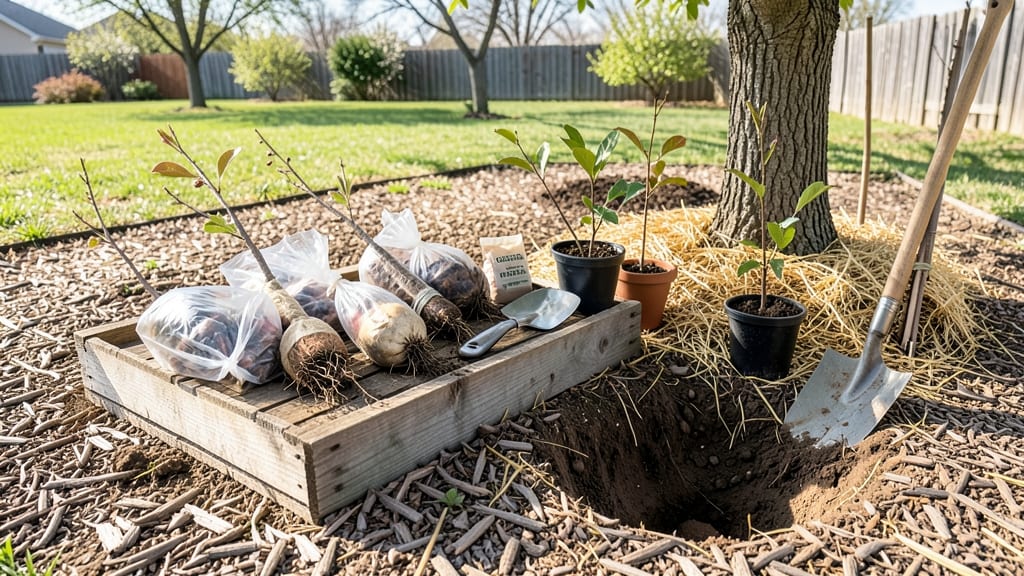
Planting fruit trees in Illinois isn't just about sticking a shovel in the ground—it's about catching that perfect window between frost and heat to give your 🍎 saplings the best shot at survival.
Whether you're dreaming of a backyard apple orchard or a peach tree grove, timing matters more than you might think.
In USDA Zones 5B-6B, early spring (March-April) and early fall (September-October) are your golden opportunities. Too early, and frost will nip tender roots before they can take hold.
Too late, and your trees won't establish strong roots before winter sets in. Let's break down exactly when to plant for maximum success.
You'll discover how to adjust planting dates based on your specific region in Illinois, whether you're dealing with bare-root trees or container-grown varieties. We'll also cover soil preparation and post-planting care to ensure your fruit trees thrive despite the Midwest's unpredictable weather.
From choosing the right variety to understanding microclimates, this guide will help you avoid common mistakes and set your orchard up for years of bountiful harvests. Ready to get started?
Best planting windows for fruit trees in Illinois by variety
Planting fruit trees in Illinois’ USDA Zones 5B/6A requires precision—timing affects root establishment and winter survival. Most deciduous varieties (apples, peaches, cherries) thrive when planted in early spring (March–April) or early fall (September–October), while evergreens (citrus, figs) need warmer soil in late spring (May–June).
Bare-root trees, common in nurseries, demand moist but not soggy soil and should go in the ground 4–6 weeks before last frost (typically by April 15). Container-grown trees, however, offer flexibility until late May since their roots aren’t exposed to cold.
For spring planting, aim for 40–50°F soil temperatures—use a soil thermometer to confirm. In fall, plant 6–8 weeks before first frost (around September 15) to allow root growth before dormancy.
Here’s a quick reference for Illinois’ top fruit trees and their ideal planting windows:
| Variety | Best Planting Window | Soil Temp. Threshold | Notes |
|---|---|---|---|
| Apples (e.g., Honeycrisp, Fuji) | Early spring (March–April) or fall (Sept 15–Oct 15) | 40–50°F | Bare-root or container; needs cross-pollination |
| Peaches (e.g., Reliance, Redhaven) | Early spring (March–April) | 45–55°F | Avoid fall planting; prone to winter injury |
| Cherries (Sweet or Tart) | Early spring (March–April) | 40–50°F | Needs well-drained soil; susceptible to bacterial canker |
| Plums (e.g., Stanley, Methley) | Early spring or fall (Sept 1–Oct 15) | 40–50°F | Self-pollinating varieties available |
| Figs (e.g., Chicago Hardy) | Late spring (May–June) | 60°F+ | Evergreen; protect from frost |
For bare-root trees, soak roots in water for 1–2 hours before planting to rehydrate them. Dig a hole twice as wide as the root ball but no deeper—planting too deep suffocates roots. Backfill with native soil mixed with compost for nutrients.
Container-grown trees can handle later planting (up to late May) since their roots stay protected. However, avoid planting in summer heat, as transplant shock becomes severe. Water deeply immediately after planting and mulch with 3–4 inches of organic mulch to retain moisture.
In northern Illinois (Zone 5B), prioritize early spring planting to avoid late frosts. Southern Illinois (Zone 6A) gardeners have a slightly extended fall window but should still plant by mid-October to ensure root establishment before winter.
Pro tip: Use a tree planting gauge to mark the original soil line on the trunk—this helps monitor mulch depth and prevents girdling (where mulch covers the trunk).
🌱
How to adjust planting dates for Illinois microclimates
Illinois' climate varies dramatically from northern to southern regions, meaning your last frost date could shift by weeks. For example, Chicago's average last frost is April 15, while Southern Illinois often sees frost-free conditions by March 25.
Always check your local USDA Zone 5B/6A adjustments—this can mean the difference between success and failure for your fruit tree roots.
Soil temperature is another critical factor. Most fruit trees thrive when soil reaches 40°F (4°C)—use a soil thermometer to confirm readiness. In northern Illinois, this may not happen until late April, while southern Illinois can hit this mark by early March.
Planting too early when soil is still cold stresses young roots and slows establishment.
Even if your area is frost-free by April, late frosts can still occur. Peach and cherry trees are especially vulnerable—delay planting until after May 1 in high-risk zones. Monitor National Weather Service alerts for your county.
For container-grown trees, you have more flexibility. These can be planted 2-4 weeks later than bare-root trees because their roots aren’t exposed to cold. However, avoid planting after June 1—new roots won’t have time to establish before winter dormancy.
In Southern Illinois, this window extends to late June.
Microclimates also affect fall planting. In northern Illinois, aim to plant by September 15 to give roots time to harden off before first frost (typically October 15).
In warmer southern regions, you can push planting to October 15, but avoid planting after November 1—young trees won’t survive Illinois winters.
Use frost-free days as a guide. Most fruit trees need 150-200 frost-free days to mature. In Zone 5B, this limits you to early-season varieties like Honeycrisp apples or Elberta peaches. In Zone 6A, you can grow later-maturing varieties like Gala apples or Redhaven cherries.
Pro tip: Plant windbreak trees (like arborvitae) on the northwest side of your orchard to protect young fruit trees from winter winds, which can dry out soil and damage bark. This simple step extends your planting window by 1-2 weeks in exposed areas.