
Plants
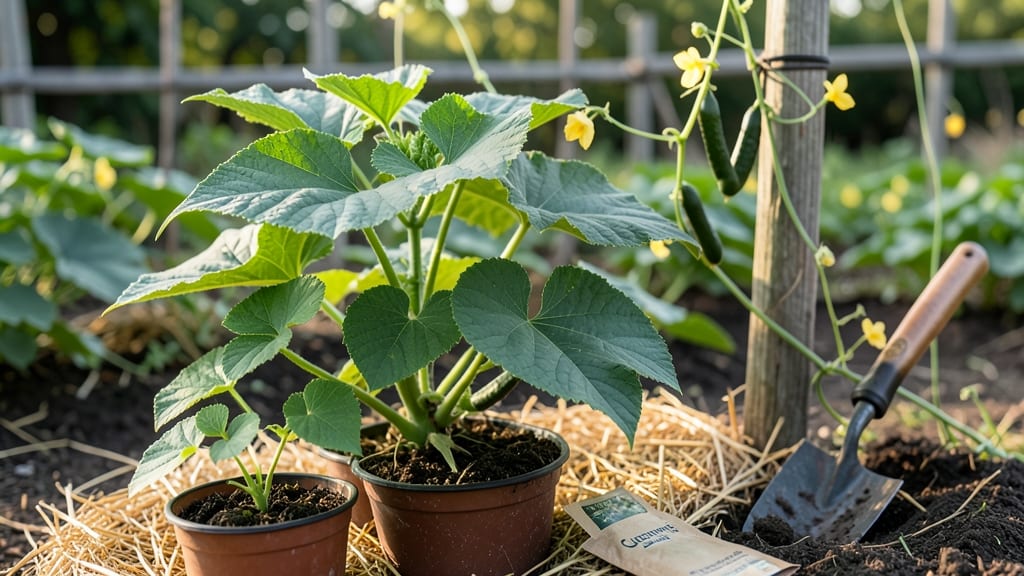
When to plant cucumbers in Zone 6 can make or break your harvest—get it wrong, and you’ll either lose plants to frost or miss the sweet spot for juicy, vine-ripened 🥒 by summer’s end. Unlike heat-loving tomatoes, cucumbers need warm soil (at least 60°F) and frost-free nights, which in Zone 6a/6b typically means waiting until mid-April to early May, right after your last frost date.
But here’s the catch: rushing too early can leave tender seedlings vulnerable, while planting too late cuts your harvest short. I’ll show you how to nail the timing—whether you’re direct-sowing seeds or transplanting starter plants—plus pro tips to stretch your season for continuous 🥒 production from July through September.
Zone 6’s short growing window (just 160 frost-free days) demands precision. We’ll break down exactly when to start seeds indoors (if you’re ambitious) versus waiting for soil to warm, and how to adjust for urban heat islands or rural chill zones.
Ready to turn your garden into a cucumber goldmine?
Skip the guesswork: By the end, you’ll know the exact dates to plant for your specific microclimate, plus how to use row covers or black plastic mulch to cheat the clock. Let’s get those vines growing!
Zone 6 cucumber planting dates: exact last-frost timing & heat requirements
In Zone 6, cucumbers thrive when planted after the last frost date—typically between mid-April and early May. However, this window shifts based on your specific location within Zone 6 (6a or 6b) and microclimates like urban heat islands or rural valleys.
For example, cities like Chicago average a last frost around April 25, while Denver sees frost-free conditions closer to May 10. Always check your local frost date map for precision.
Cucumbers are heat-loving plants that need soil temperatures above 60°F to germinate and grow. Cold soil slows germination to a crawl—seeds may take 2-3 weeks to sprout at 50°F, but just 3-5 days at 70°F. Use a soil thermometer to confirm readiness before planting.
If your soil is still chilly, try black plastic mulch to warm it faster.
Here’s the golden planting window for Zone 6:
| Stage | Action | Zone 6 Timing |
|---|---|---|
| Last Frost Date | Average for Zone 6 | Mid-April to early May |
| Soil Temperature | Minimum for planting | 60°F (15°C) |
| Planting Window | Ideal start date | 2-3 weeks after last frost |
| Buffer Zone | For high-risk areas | Add 2 weeks |
| Harvest Start | Expected timeline | July (50-70 days after planting) |
If you’re in a Zone 6a area (colder sub-zone), err on the side of caution and wait until May 1 or later. For Zone 6b (warmer sub-zone), you can plant as early as late April, especially if you use row covers to protect seedlings from late frosts.
Always monitor your local weather forecast—a late frost can devastate young plants in just one night.
Pro tip: Use a frost calendar from your local cooperative extension service (e.g., Purdue for Indiana, Cornell for New York). These provide hyper-local data that’s far more accurate than generic Zone 6 averages.
For example, Chicago’s last frost is often 2 weeks earlier than rural areas in northern Illinois.
For succession planting (to extend harvests), sow a second batch 4-6 weeks after your first planting. This works best with fast-maturing varieties (e.g., ‘Bush Champion’, which produces in just 50 days).
By staggering plantings, you can enjoy cucumbers from July through September—right up until the first frost in mid-October.
One common mistake is planting cucumbers too early and then dealing with stunted growth or powdery mildew from cool, damp conditions. If you’re eager to start, begin indoor seeds 3-4 weeks before your last frost date and transplant seedlings outdoors after the danger of frost has passed.
This gives you a 2-week head start on the growing season.
For urban gardeners, microclimates can shift planting times dramatically. A south-facing wall or blacktop parking lot nearby can create a 5-10°F warmer zone, allowing you to plant 1-2 weeks earlier. Conversely, low-lying areas or shady spots may require delaying planting by 1-2 weeks to avoid frost damage.
Always pair your planting date with proper soil prep: cucumbers need well-draining soil rich in organic matter. Amend your soil with compost or aged manure 2-3 weeks before planting to ensure nutrients are available when roots start growing.
This step is non-negotiable—poor soil = poor yields, no matter how perfect your timing is.
Finally, keep a planting journal to track your success. Note your exact planting date, variety, and any weather anomalies (e.g., late frost, heatwave). Over time, you’ll fine-tune your Zone 6 cucumber schedule to match your unique growing conditions.
How to extend your cucumber season in Zone 6: starter plants vs. direct sowing
Deciding between starter plants and direct sowing can mean the difference between a bumper crop and a failed experiment in Zone 6. Both methods work, but your choice depends on your local frost dates and how quickly you can warm your soil.
I’ve found that transplants give me a 2-week head start, while direct sowing saves money and reduces transplant shock.
For Zone 6 gardeners, transplanting is ideal if you’re in a high-risk frost area or have a short growing season. Start seeds indoors 3-4 weeks before your last frost date—typically mid-March to early April—using seed trays with well-draining soil.
Harden off seedlings for 7-10 days before transplanting 2-3 weeks after last frost (usually late April to early May).
Starter Plants
- Faster growth (2-week head start)
- Higher survival rate (avoids transplant shock)
- Earlier harvest (critical for short Zone 6 season)
- Costs more upfront (seedlings vs. seeds)
- Limited variety (local nurseries may not carry all types)
- Requires indoor space/time for seed starting
Direct Sowing
- Cheaper (seeds cost pennies vs. seedlings)
- More variety (save seeds from heirlooms)
- No transplant shock (roots undisturbed)
- Slower germination (waits on soil warmth)
- Lower survival if late frost hits
- Requires consistent soil temps (>60°F)
If you choose direct sowing, wait until the soil reaches at least 60°F and all frost risk has passed. In Zone 6, this is usually late April to early May.
Use black plastic mulch to warm the soil faster—it can raise temperatures by 5-10°F, speeding up germination. For extra protection, cover seeds with row covers until they sprout.
For a second planting in late summer, direct sow ‘Straight Eight’ or ‘Marketmore’ varieties 60-70 days before first frost (around mid-August). This gives you a fall harvest before cold sets in.
I’ve had success with this method, but only if I use fast-maturing varieties and protect seedlings with cold frames if nights dip below 50°F.
Pro tip: Use a soil thermometer to monitor temperatures. Cucumber seeds won’t germinate below 60°F, and growth slows dramatically below 70°F.
If your soil is still cool, try the 72-hour soil-warming hack: Lay down clear plastic sheeting over the bed for 3 days before planting to trap heat. This can jumpstart germination by 5-7 days.
Remember, Zone 6’s short growing season demands precision. Whether you choose transplants or direct sowing, timing is your best friend. Start early, protect your plants, and you’ll be feasting on fresh cucumbers from July through September—no frost in sight! 🌱