
Plants
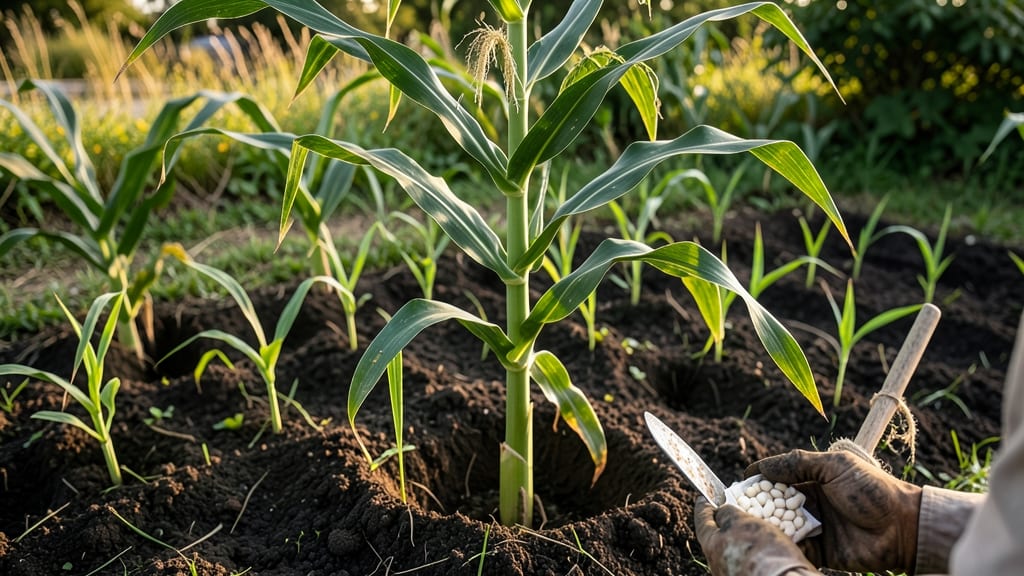
Timing your corn planting in Minnesota isn't just about following a calendar—it's the key to avoiding frost-killed seedlings or harvests that never fully ripen.
With 🌽 that can grow from 6 to 10 feet tall in just 3 months, getting the window right means the difference between golden ears and wasted effort.
Here in zones 4a-5b, where last frosts can linger into May, planting too early risks losing your entire crop to a sudden freeze. But waiting too long cuts your growing season short, leaving you with immature corn when summer winds down.
The sweet spot? Soil that's warmed to at least 50°F—a rule that changes everything about your planting strategy.
I'll walk you through exactly when to put those seeds in the ground—from southern Minnesota's earlier windows to northern regions where patience (and row covers) become your best friends.
You'll learn how to read your soil, pick the right varieties for your microclimate, and even adjust if Mother Nature throws you a curveball.
Let's make sure your corn gets the perfect start—because in Minnesota, the first frost doesn't care about your plans, and neither should you.
Minnesota corn planting dates by soil temperature zones
Minnesota’s diverse climate means your corn planting window depends heavily on your specific region and soil temperature. Unlike many crops, corn won’t germinate until the soil reaches at least 50°F (10°C)—and waiting for this warmth is critical to avoid seed rot or stunted growth.
The table below breaks down the ideal planting windows by Minnesota’s climate zones, including the average last frost dates and corn maturity days you can realistically expect.
For example, gardeners in Southern Minnesota (like Rochester) can start planting as early as mid-April, while those in Northern Minnesota (like Duluth) should wait until mid-May to avoid frost damage. These differences highlight why using a soil thermometer is non-negotiable—it’s far more accurate than guessing by air temperature.
Here’s how to use this table: Match your location to the nearest region, then plant within the optimal planting window.
If your area falls between zones (e.g., near the Twin Cities), err on the side of planting slightly later—a few extra warm days in the soil will pay off with faster germination and stronger seedlings.
If you’re planting in Southern Minnesota, aim for early-maturing varieties (like ‘Early Sunglow’) to ensure harvests before the first frost in early October. In contrast, Northern Minnesota gardeners should focus on 100+ day varieties (e.g., ‘Pride of Wisconsin’) to maximize their shorter growing season.
Pro tip: Check the seed packet for days to maturity and subtract your region’s frost-free window (e.g., 150 days in the Twin Cities) to avoid disappointment.
One common mistake is relying on air temperature instead of soil temperature. A warm spring day might trick you into planting early, but if the soil is still chilly, your seeds will rot.
Always test soil temperature at a 2-inch depth in the morning—this is the gold standard for corn planting timing.
For gardeners in urban areas (like Minneapolis or St. Paul), microclimates can create local variations. If your garden sits in a heat pocket (e.g., near a brick wall or pavement), you might plant 1–2 weeks earlier than the table suggests.
Conversely, if your yard is shaded by trees or near a lake, delay planting by a week to account for cooler soil.
Finally, consider planting dates for succession. If you love fresh corn all summer, stagger your plantings every 2 weeks within your region’s window. This ensures a continuous harvest from late July through September, even if Mother Nature throws a curveball with late frosts or heatwaves.
🌽
How to adjust corn planting for Minnesota’s unpredictable weather
Minnesota’s weather can throw even the most experienced gardeners for a loop—one day it’s sunny, the next a surprise frost hits. To keep your corn thriving despite these swings, I’ve tested a few proven strategies that work in my Zone 4b garden.
The key is flexibility: knowing when to push boundaries and when to play it safe.
First, never rely on a single frost date. While the USDA provides averages, local microclimates can shift those dates by weeks. For example, a south-facing slope in southern Minnesota might warm up faster than a shaded valley in northern Minnesota.
Always check local weather forecasts and add a 2-week buffer to your planting timeline.
Here’s my go-to method for adjusting planting times: I use a soil thermometer to confirm the ground is ready. Corn seeds need soil temperatures of at least 50°F (10°C) at a 2-inch depth for 5+ consecutive days to germinate properly.
In cooler years, this can push planting back by 1-2 weeks—but it’s worth the wait to avoid seed rot or slow germination.
Plant only when soil reaches 50°F (10°C) at 2-inch depth for 5+ consecutive days. Cooler soils delay germination, leaving seedlings vulnerable to frost.
For northern MN, I swear by ‘Pioneer 33T23’ (85-day) or ‘Golden Bantam’ (75-day). These varieties beat frost by 2-3 weeks compared to standard hybrids.
If frost is forecasted within 2 weeks of planting, cover young plants with row covers or floating mulch. I’ve saved entire rows this way—even in June frosts!
Sow 20% of seeds 1 week after your primary planting date. This spreads risk—if the first batch struggles, the second may thrive.
Another trick I’ve learned is to use black plastic mulch in cooler areas. It warms the soil faster and suppresses weeds, giving your corn a 2-week head start. Just lay it down 1-2 weeks before planting to let it heat up the ground.
For extra protection, I’ve even used low tunnels in my northern MN garden to extend the season by 3-4 weeks.
If all else fails, don’t panic—corn is resilient! Even if you plant late, focus on fast-maturing varieties and consistent watering. I’ve had success with ‘Early Sunglow’ (70-day) in years when spring dragged on. The key is adapting your expectations and choosing the right tools for your climate.