
Companion Plants
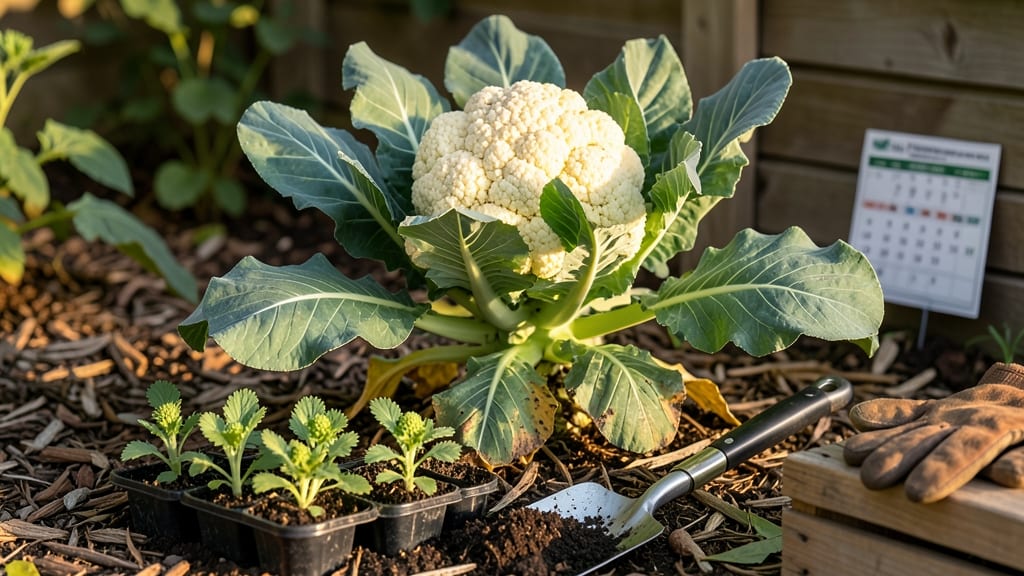
Timing your cauliflower planting in Pennsylvania could mean the difference between a bountiful harvest and a frustrating garden fail. Unlike heat-loving veggies, cauliflower 🥬 thrives in cooler weather, but getting the dates wrong leads to bitter, inedible bolts—especially in PA's unpredictable climate.
The key is planting 6-8 weeks before your last frost date, whether that's early spring (March-April) or late summer (July-August). For zones 5b-7a, that means starting seeds indoors by March 1st for spring crops or direct-sowing by July 15th for fall harvests.
Miss these windows, and you risk stunted growth or premature flowering.
What makes PA tricky? Microclimates vary wildly—even within 50 miles, frost dates can shift by weeks. I'll break down exact planting schedules for your specific zone, plus pro tips to head-start seedlings in cooler areas like Erie or Poconos.
Ready to grow perfect cauliflower heads without the stress? Let's dive into the zone-specific dates and soil tricks that keep your plants happy—from seed to harvest.
PA planting zones & exact dates to avoid cauliflower bolting
Pennsylvania’s USDA zones 5b-7a create a unique challenge for cauliflower growers. The key to avoiding bolting lies in precise timing—plant too early, and frost kills seedlings; too late, and heat triggers premature flowering.
My zone-specific planting calendar solves this puzzle by aligning your schedule with PA’s last frost dates and soil temperatures.
For spring planting, the magic window opens when soil reaches 50°F (10°C), typically 2-3 weeks before your last frost date. In cooler Zone 5b, that’s usually late April, while Zone 7a gardeners can start as early as mid-March.
Fall planting requires even more precision—seedlings must establish roots before daytime temps drop below 65°F (18°C).
| Zone | Last Frost | Spring Planting Window | Fall Planting Window |
|---|---|---|---|
| 5b | April 15 | Late April - Early May | July 15 - August 1 |
| 6a | April 1 | Mid-March - Late April | July 1 - July 15 |
| 7a | April 30 | Late February - Early April | June 15 - July 1 |
*Transplant seedlings 2-3 weeks before ground warms to 50°F (10°C)
I recommend starting seeds indoors for a 6-8 week head start—this gives you flexibility to transplant at the perfect moment. Use grow lights to maintain 12-14 hours of light daily until seedlings are ready.
For direct sowing, wait until soil temps consistently stay above 50°F (10°C)—test with a soil thermometer for accuracy.
Fall planting demands even more caution. Seedlings planted after August 1 in most of PA risk bolting before harvest. My trick? Use shade cloth during summer’s peak heat to keep soil temps below 75°F (24°C).
This buys you critical time to establish plants before cooler weather arrives. For Zone 7a, aim to transplant by June 15 at the latest.
Don’t overlook microclimates—urban heat islands and valley locations can shift your planting window by 2-3 weeks. I always check local weather stations (like Penn State Extension’s) for 5-day forecasts before transplanting. A sudden cold snap can set your progress back weeks.
Protect young plants with row covers during late spring frosts—even Zone 7a can see unexpected dips below 32°F (0°C) in May. These lightweight fabrics trap heat without smothering growth. For fall, use them to extend harvest season by shielding plants from early frosts.
Soil prep is just as critical as timing. Amend beds with compost and aged manure to create fertile, moisture-retentive soil. Cauliflower hates poor drainage—raise beds in heavy clay areas to prevent root rot. My go-to mix is 60% garden soil, 30% compost, and 10% perlite for optimal structure.
Remember: Consistency beats perfection. Even with exact dates, watch for weather anomalies—PA’s unpredictable springs can throw off your best-laid plans. Adjust transplanting dates by 1 week if soil remains cold or wet. The goal is healthy plants before heat stress hits.
For bolt-resistant varieties, prioritize 'Snowball Y Improved' or 'Purple of Sicily'—both thrive in PA’s climate. These cultivars give you a 2-week buffer before bolting compared to standard types. Pair them with consistent moisture and even sunlight for foolproof results.
Signs your cauliflower is bolting (and how to fix it)
Cauliflower bolting in Pennsylvania gardens often happens when plants sense heat stress or drought conditions. The first sign is usually tall, rapid stem elongation—your plants might shoot up overnight like weeds. This is your cauliflower’s way of saying, "I’m bolting to survive!" 🌱
Next, watch for yellowing lower leaves and small white flowers forming at the top. These flowers mean your plant has shifted focus from growing heads to producing seeds. If you see loose, uneven curds instead of tight heads, bolting has already begun. 🌿
Here’s the good news: you can often salvage bolting cauliflower with quick action. First, water deeply every morning to reduce stress. Next, provide afternoon shade using shade cloth or a temporary row cover to lower soil temperatures.
This mimics cooler spring conditions and can trick the plant into focusing on head growth again. ✂️