
Trees
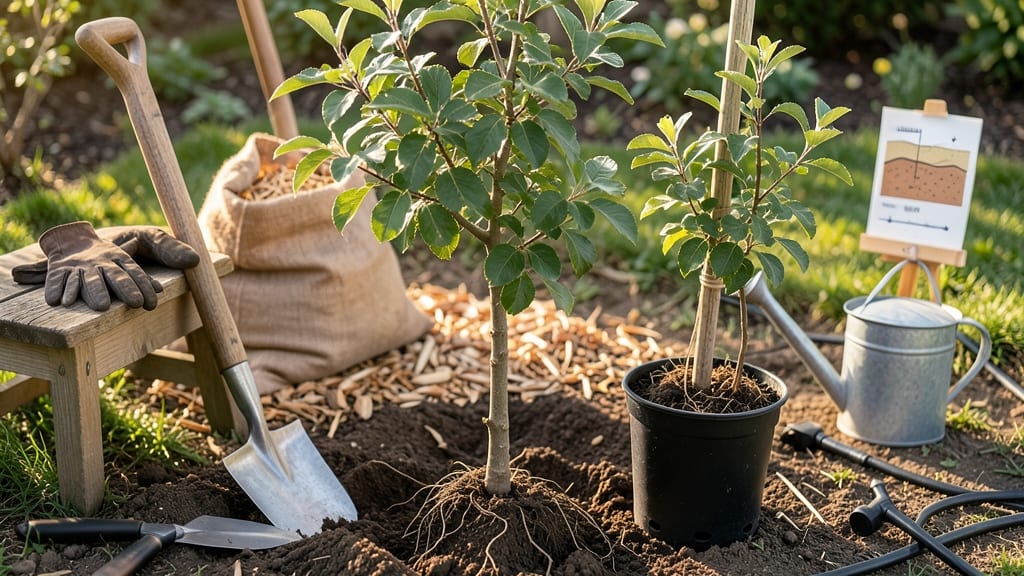
Planting your 🍎 Apple Tree at the wrong time in North Carolina could mean the difference between a thriving orchard and years of frustration.
The perfect window isn't just about the calendar—it's about avoiding frost damage, ensuring strong root growth, and setting your tree up for bountiful harvests in 2-3 years.
In zones 6b-8a, most gardeners swear by late winter to early spring (February-April) as the golden period, but fall (October-November) offers advantages too. Whether you're planting bare-root saplings or container-grown trees, timing matters more than you might think—especially when North Carolina's unpredictable frost dates come into play.
I'll break down exactly when to plant based on your specific zone, variety, and whether you're working with dormant roots or established plants. You'll discover how to read your local frost forecast like a pro and avoid the costly mistakes that trip up even experienced growers.
Ready to get your orchard off to the right start? Let's dive into the zone-specific deadlines and variety recommendations that will have your 🍎 Apple Tree flourishing year after year.
North Carolina apple tree planting deadlines by USDA Zone (5b, 6a, 7a, 7b)
North Carolina's diverse climate—from the cool mountains (USDA Zone 5b) to the warmer coastal plains (Zone 7b)—means your apple tree planting window can shift by up to 6 weeks depending on location.
For Zone 5b, aim for late March to early April to avoid late frosts, while Zone 7b gardeners have more flexibility until mid-April. Fall planting is also ideal, with October to November being the safest bet for root establishment before winter dormancy.
Bare-root apple trees are best planted in dormant season (late winter/early spring), while container-grown trees can handle slightly later windows—up to May in Zone 7b—thanks to their established root systems.
However, planting after last frost date (March 15 in mountains, April 1 near coast) risks heat stress in young saplings.
Here’s how to align your planting with North Carolina’s USDA zones and variety-specific needs:
| USDA Zone | Ideal Planting Window | Last Frost Date | Best Varieties | Key Consideration |
|---|---|---|---|---|
| 5b (Mountains) | Late March–Early April | March 1–15 | Jonagold, Akane | Cold-hardy, needs chilling hours |
| 6a (Piedmont) | Mid-March–Mid-April | March 15–April 1 | Fuji, Gala | Moderate chill, well-drained soil needed |
| 7a (Coastal Piedmont) | Early–Mid-April | April 1–15 | Granny Smith, Red Delicious | Heat-tolerant, mulch heavily |
| 7b (Coastal Plains) | Mid-April–Early May | April 15–May 1 | Ambrosia, Braeburn | Low chill, drought-resistant |
For fall planting, aim for 6–8 weeks before first frost (October–November). This gives roots time to establish before winter dormancy. In Zone 5b, plant by November 1; in Zone 7b, extend to mid-November.
Container-grown trees can even handle December planting in mild zones, but protect them with mulch and frost cloth.
Pro tip: Check your local last frost date using the NC State Climate Office or Almanac—mountain regions can have 2–3 weeks earlier frosts than coastal areas.
Adjust your bare-root vs. container-grown choice based on your zone: Bare-root trees need dormant-season planting, while container-grown trees offer flexibility for late springs.
Soil temperature matters too! Apple roots thrive when soil is above 40°F. Use a soil thermometer to confirm—if it’s below 40°F, wait 1–2 weeks before planting. In Zone 7b, this often means delaying until mid-April to avoid root rot.
Remember: Early planting (February–March) gives trees a head start for first-year growth, but fall planting reduces transplant shock by letting roots establish before summer heat. For fastest fruit, prioritize dwarf varieties like Akane or Ambrosia, which bear fruit in 3–4 years vs. 5–7 years for standard trees.
🌱
Best apple tree varieties for North Carolina’s climate and their ideal planting months
North Carolina’s diverse climate—from the cool mountain regions to the hot coastal plains—means not all apple varieties thrive equally. Choosing the right apple tree variety and planting it at the optimal time ensures healthy growth and fruit production.
Here are my top 12 region-specific varieties that perform best in NC, along with their ideal planting windows.
For mountain zones (USDA 5b-6a), prioritize cold-hardy varieties like Jonagold or McIntosh, which handle early frosts. In coastal zones (USDA 7b-8a), heat-tolerant varieties like Akane or Gala shine. Each variety has a unique planting window—some need early spring planting, while others tolerate fall planting better.
🌱 Pro Tip: Always check your last frost date (typically March 15 in mountains, April 1 in Piedmont, and April 15 near the coast). Plant 4-6 weeks before to avoid frost damage to new roots.
🍎 Fastest-to-Fruit Apple Varieties for NC (Years to First Harvest)
- 1-2 years: Dwarf Honeycrisp (ideal for containers, harvests early)
- 2-3 years: Semi-Dwarf Fuji (reliable pollinator, sweet flavor)
- 3-4 years: Akane (heat-tolerant, great for Piedmont)
- 4-5 years: Jonagold (cold-hardy, mountain-friendly)
- 5+ years: Granny Smith (longer wait, but worth it for tart apples)
💡 Note: Dwarf and semi-dwarf varieties fruit 2-3 years faster than standard trees!
If you’re impatient for fruit, dwarf varieties like Honeycrisp or Gala are perfect—some even produce apples in their second year! For long-term orchards, standard varieties like Jonathan or Rome offer larger yields but take 5-7 years to mature.
For pollination, plant at least two compatible varieties (e.g., Gala + Fuji or McIntosh + Jonagold). Some varieties, like Akane, are self-pollinating, making them ideal for small spaces. Always verify cross-pollination needs before planting!
🌿 Key Takeaway: Match your variety to your zone and plant in the recommended window—this maximizes your chances of a bountiful harvest in 3-5 years. For coastal NC, fall planting (October-November) works best; in the mountains, early spring (March-April) is ideal.