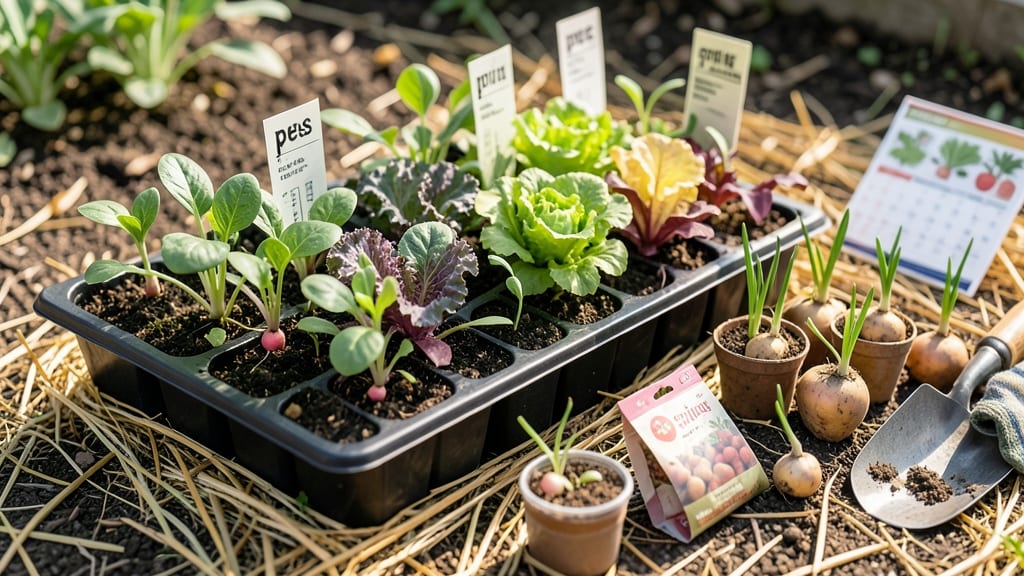
If you’ve ever stared at a seed packet wondering when should you plant a garden in Michigan, you’re not alone—getting the timing wrong can mean the difference between a bountiful harvest and a sad, wilted disappointment.
Michigan’s 5b-6b climate brings two distinct planting seasons: spring’s eager rush and fall’s cozy second chance, both framed by frost dates that shift from late April in the south to early May in the north.
But here’s the catch: even with those windows, one wrong move—like planting tomatoes too early—can leave your 🌱 vulnerable to frost. The key isn’t just memorizing dates; it’s understanding how soil temperature, crop type, and regional microclimates play into your strategy.
Whether you’re a first-time gardener or a seasoned green thumb, knowing exactly when to start seeds indoors or transplant seedlings outdoors is the secret to avoiding common pitfalls.
In this guide, I’ll break down the optimal planting windows for Michigan’s most popular crops, from cool-season greens to heat-loving tomatoes, and share pro tips for adjusting when Mother Nature throws curveballs. No more guessing—just data-backed timing to help you grow like a local.
Ready to turn your garden dreams into reality? Let’s dig into the details so you can plant with confidence and harvest with pride.
🌱
When to Plant Garden
Jan
❄️
Feb
❄️
Mar
🌱
Apr
🌱
May
🌱
Jun
🌱
Jul
🌱
Aug
🌱
Sep
🌱
Oct
🍂
Nov
🍂
Dec
❄️
Michigan planting dates by USDA Zone: frost-free timeline for 15 key vegetables
Michigan’s USDA zones 4b to 6b create a 6-week variation in last frost dates—critical for planning your garden. In southern Michigan (Zone 6b), you can plant warm-season crops like tomatoes and peppers by mid-April, while northern Michigan (Zone 4b) gardeners should wait until early May.
The key is knowing your average last frost date and adjusting for cold-sensitive plants.
For cool-season crops like spinach and peas, start seeds indoors 4-6 weeks before your last frost date. In Zone 5b (central Michigan), that means late March for early planting.
Warm-season crops like cucumbers and beans need soil temperatures above 60°F, so wait until after Memorial Day in most areas.
Here’s a zone-specific planting timeline for Michigan’s most popular vegetables, based on MSU Extension guidelines and local frost data. Use this as your garden calendar to avoid frost damage and maximize yields.
| Crop |
Zone 4b (Northern MI) |
Zone 5b (Central MI) |
Zone 6b (Southern MI) |
Notes |
| Peas |
Early April (direct sow) |
Late March (direct sow) |
Mid-March (direct sow) |
Cold-hardy; plant early for spring harvest. |
| Spinach |
Early April (direct sow) |
Late March (direct sow) |
Mid-March (direct sow) |
Bolt-resistant varieties for summer planting. |
| Lettuce |
Early April (direct sow) |
Late March (direct sow) |
Mid-March (direct sow) |
Succession plant every 2 weeks. |
| Radishes |
Early April (direct sow) |
Late March (direct sow) |
Mid-March (direct sow) |
Fast-growing; harvest in 30 days. |
| Tomatoes |
Early May (after frost) |
Mid-April (after frost) |
Late April (after frost) |
Use row covers for early starts. |
| Peppers |
Early May (after frost) |
Mid-April (after frost) |
Late April (after frost) |
Start indoors 8-10 weeks before transplant. |
| Cucumbers |
Early May (after frost) |
Mid-April (after frost) |
Late April (after frost) |
Trellis for better air circulation. |
| Beans |
Early May (after frost) |
Mid-April (after frost) |
Late April (after frost) |
How to adjust planting dates for Michigan’s unpredictable weather patterns
Michigan’s weather can throw a curveball—one day it’s 60°F and sunny, the next a snow flurry in May. To beat Mother Nature’s unpredictability, I’ve learned to use row covers, season extenders, and a flexible planting timeline that accounts for frost delays.
The key is planning ahead and staying adaptable.
Start by marking your calendar with historical frost dates from your local MSU Extension office—these are your baseline. But don’t stop there. In northern Michigan (Zone 4b-5a), last frosts can linger until May 15, while southern Michigan (Zone 5b-6b) often sees frost-free conditions by April 20.
Adjust your dates accordingly.
⚠️ Warning: Late Frost Risks
Even if your neighbors are planting, wait until soil temps hit 50°F for warm-season crops like tomatoes and peppers. Use a soil thermometer—I’ve seen 55°F air temps with 45°F soil, which can stunt growth.
Pro Tip: Plant cold-hardy crops (spinach, kale) 4-6 weeks before your last frost date to ensure they’re established before warm weather arrives.
For those unpredictable late frosts, I swear by floating row covers (lightweight fabric) to protect tender seedlings like cucumbers or squash. Remove them when flowers appear to allow pollination. Another trick? Plant fast-maturing varieties (e.g., bush beans in 50 days) to harvest before frost strikes.
Fall planting is another game-changer. In Zone 5b-6b, I start cool-season crops (broccoli, carrots) in early August for harvests before the first frost (mid-October). Use a frost calendar to calculate your safe planting window—typically 12-14 weeks before your first frost date.
Don’t forget to prep your soil early. Even if you’re not planting yet, amend beds in early spring with compost and organic matter to warm up faster. I test my soil’s pH and nutrients in March so I’m ready to plant as soon as conditions allow.
Finally, keep a gardening journal to track your local frost dates and plant performance. Over time, you’ll spot patterns—like that 2023’s late May frost delayed my pepper planting by a week.
Adjusting your timeline each year based on real data is the secret to consistent harvests in Michigan’s fickle climate. 🌱
★★★★★4.7(12 reviews)
|