
Companion Plants
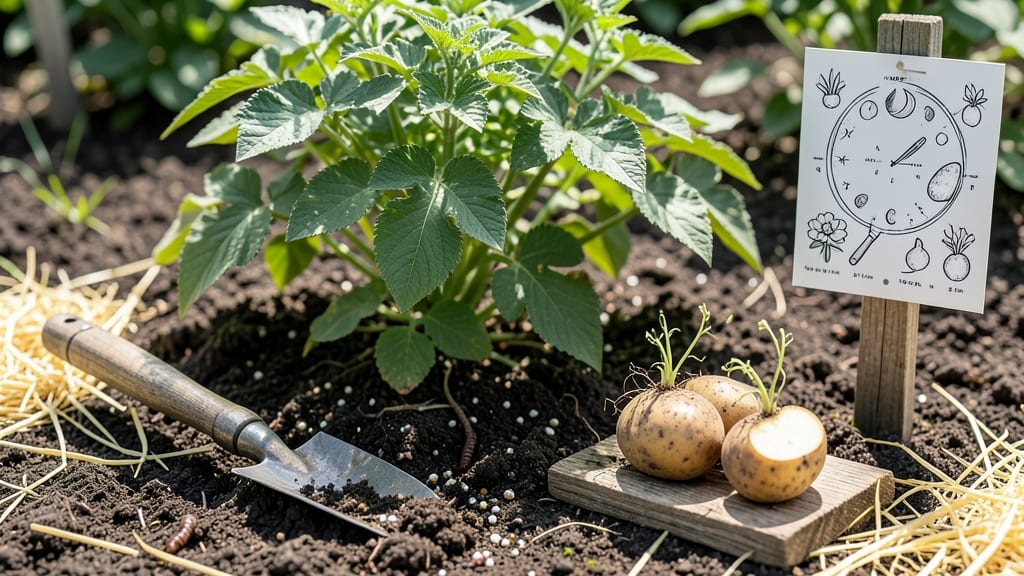
When should I plant potatoes in Zone 6? Timing your 🥔 potato planting in Zone 6 could mean the difference between a thriving harvest and wasted effort. Planting too early risks frost damage, while waiting too long cuts your growing season short—both mistakes lead to rotten tubers instead of crisp, homegrown spuds.
Most gardeners in Zone 6 (General) aim to plant 4-6 weeks before the last frost, typically between mid-March and early April. But with Zone 6’s unpredictable frost dates—ranging from April 15 in milder areas to May 15 in colder pockets—getting the timing right requires more than guesswork.
I’ll break down the exact soil temperature rules to follow, how to adjust for early or late frosts, and which fast-maturing varieties thrive in Zone 6’s short season. You’ll also learn how to prep your soil and avoid common pitfalls that sabotage potato harvests.
Skip the trial-and-error approach—let’s get your potatoes in the ground at the perfect moment for a bumper crop.
Zone 6 potato planting timeline: frost dates and soil temperature rules
In Zone 6, potatoes thrive when planted 4-6 weeks before your last frost date, typically between mid-March and mid-April. The key is to wait until the soil warms to 45-55°F—cold soil slows sprouting and invites rot.
For most of Zone 6, this means aiming for late March to early April in regions like Ohio, Pennsylvania, or Indiana, where frost lingers until April 15.
If you plant too early, your potatoes may rot in chilly soil. If you wait too long, you risk shortening the growing season and missing the 70-120 day harvest window before fall frosts hit.
For example, if your last frost is May 1, plant by mid-April to ensure a full season. Use a soil thermometer to confirm readiness—it’s the only way to avoid guesswork.
Here’s a quick rule of thumb: Count backward from your last frost date. Subtract 90 days for early varieties (like Yukon Gold) or 120 days for late varieties (like Kennebec).
This gives you your ideal planting window. For Zone 6’s 165 frost-free days, this means starting in late March to early April for most varieties.
| Zone 6 Potato Planting Guide | Key Details |
|---|---|
| Ideal Planting Window | Late March to early April (4-6 weeks before last frost) |
| Soil Temperature Threshold | 45–55°F (use a soil thermometer) |
| Last Frost Date (Zone 6) | April 15 (varies by region) |
| Early Varieties (70-day harvest) | Plant by March 15 for harvest by July 15 |
| Late Varieties (120-day harvest) | Plant by April 1 for harvest by August 1 |
| Frost-Free Days in Zone 6 | 165 days (critical for full maturity) |
One common mistake in Zone 6 is planting too early and ending up with rotten tubers due to cold, wet soil. I’ve seen this happen when gardeners rush to plant in February, thinking they’re getting a head start.
Instead, focus on preparing your soil in early spring—amend it with compost and aged manure to improve drainage, which is critical for preventing rot.
Another tip: If you’re in a cooler microclimate within Zone 6 (like higher elevations), push your planting date back by 1-2 weeks. For example, in northern Pennsylvania, frost can linger until May 1, so aim for late April planting to avoid risks.
Always check your local USDA Plant Hardiness Zone Map for precise frost dates.
For container gardening in Zone 6, start potatoes 2-3 weeks earlier than in-ground planting. Pots warm up faster, so you can begin in mid-March if your containers are in a sunny, sheltered spot.
Just ensure your pots have drainage holes to prevent waterlogging, which is a major cause of tuber rot.
If you’re unsure about your last frost date, use the National Weather Service’s frost calendar or ask your local Cooperative Extension Service. They provide hyper-local data that’s far more accurate than generic Zone 6 guidelines.
For example, Chicago (Zone 5b) has later frosts than Columbus (Zone 6a), so adjust accordingly.
Finally, remember that potatoes need consistent moisture but hate soggy soil. Once planted, water deeply 1-2 times per week to encourage tuber development. Mulch with straw or grass clippings to keep soil temperatures stable and moisture levels even—this is especially important in Zone 6’s variable spring weather.
By following these soil temperature and frost date rules, you’ll maximize your chances of a healthy, abundant potato harvest in Zone 6. The key is patience: wait for the right conditions, and your potatoes will reward you with plump, disease-free tubers ready for harvest by summer’s end. 🥔
Zone 6 potato planting timeline: frost dates and soil temperature rules
In Zone 6, where last frost typically hits around April 15, timing your potato planting is all about balancing soil warmth and frost risk. Planting too early means cold soil can stunt growth, while waiting too long leaves no time for tubers to mature before summer heat.
The sweet spot? 4-6 weeks before your last frost date, usually between March 15 and April 15.
Potatoes thrive when soil temperatures reach 45–55°F. Use a soil thermometer to check—if it’s consistently below 40°F, wait a few more weeks. In colder microclimates (like Zone 6a), aim for early April; in milder areas (like Zone 6b), late March works.
Pro tip: Chitting (pre-sprouting) your seed potatoes indoors 4–6 weeks before planting gives you a head start.
Zone 6 Potato Planting Summary
| Stage | Action | Key Details |
|---|---|---|
| Pre-Planting (Feb-Mar) | Chitting seed potatoes | Place in light, cool spot (55–65°F) to sprout 1-inch shoots. |
| Planting Window | 4–6 weeks before last frost | Ideal: March 15–April 15; soil temp ≥45°F. |
| Soil Prep | Loosen soil, add compost | Avoid fresh manure; aim for pH 5.0–6.5. |
| Planting Depth | 4 inches deep | Space rows 30 inches apart; hills 12 inches apart. |
| Harvest Window | 70–120 days after planting | Early varieties: June–July; late varieties: August–September. |
If you’re in a Zone 6a area with late frosts (like parts of Michigan or New York’s Adirondacks), consider planting early-maturing varieties (like Red Norland) in late April to avoid frost damage.
For Zone 6b (e.g., Ohio or Virginia), you have more flexibility—start as early as mid-March with row covers to protect young plants.
One common mistake? Planting when soil is still cold (below 40°F). Cold soil slows sprouting and increases rot risk. Test your soil with a thermometer—if it’s too chilly, wait or use black plastic mulch to warm it faster.
Also, avoid planting after May 1 unless you’re growing late-season varieties, as tubers need 90–120 days to mature before frost.
For a second crop, try late-season planting in early July with fast-maturing varieties like ‘Early Girl’. These potatoes grow quickly and can be harvested before the first frost (around October 15 in Zone 6). Just be prepared to hill soil around stems to protect tubers from early cold snaps.
Remember: Frost kills foliage, not tubers, but cold soil stunts growth. Time your planting so tubers have at least 60 days of warm soil before harvest. With the right timing, you’ll avoid the heartbreak of small, underdeveloped potatoes or rotten tubers from planting too late.