
Plants
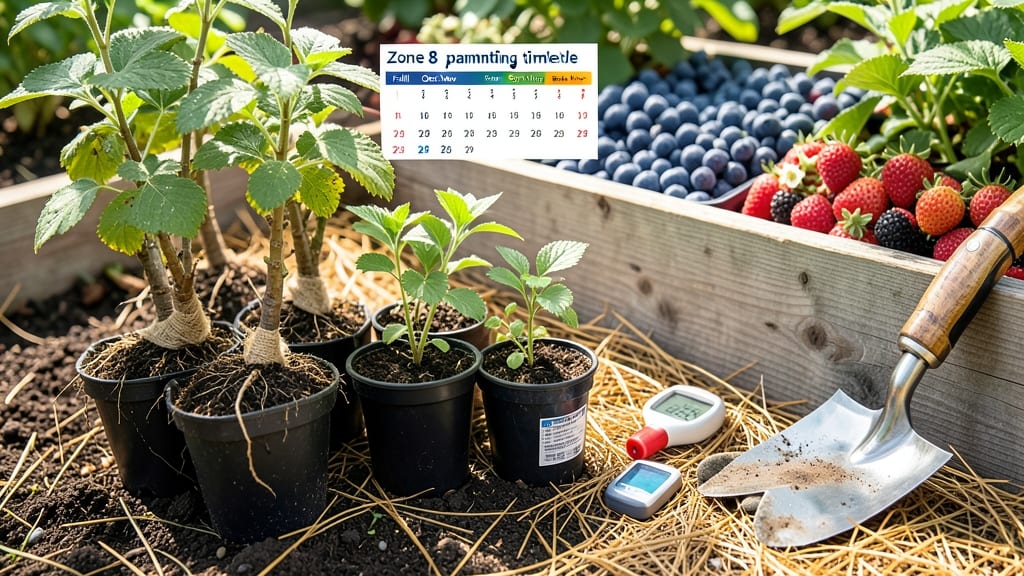
Timing is everything when it comes to growing berries in Zone 8—plant too early, and frost can ruin tender seedlings; too late, and your harvest might never reach its full potential.
With the right schedule, you can enjoy luscious 🫐 from spring through summer, but getting it wrong means struggling with weak plants or missed fruiting seasons.
I’ve grown berries in Zone 8 for years, and the difference between a thriving patch and a disappointing one often comes down to when you plant.
Whether you’re adding raspberries, blueberries, or blackberries to your garden, the best windows are late winter to early spring or fall—just before the first frost. But there’s more to it than just picking a month.
In this guide, I’ll break down the exact month-by-month schedule for planting berries in Zone 8, including soil prep, frost protection, and variety-specific tips. You’ll learn how to avoid common mistakes that sabotage yields and discover the best time to plant each type of berry for a bountiful harvest.
Ready to transform your garden into a berry paradise? Let’s dive into the precise timing and care your plants need to thrive from seedling to harvest.
Best planting months for different berry types in Zone 8
Zone 8's mild winters and long growing season create perfect conditions for berries, but timing is critical. Plant too early, and a surprise frost can kill tender berry plants. Too late, and your harvest may arrive during summer heatwaves when berries spoil faster.
Each berry type has unique chilling requirements and heat tolerance, so let's break down the ideal windows for your garden.
For strawberries, which thrive in cooler temperatures, aim for early spring (February-March) or fall (September-October). These hardy plants establish roots quickly, giving them a head start before summer's intensity. June-bearing varieties especially benefit from fall planting, as they need winter chilling to fruit the following spring.
Raspberries and blackberries prefer late winter to early spring (February-March) planting. These perennial brambles establish extensive root systems, so give them time to settle before summer's heat. Fall planting is possible in Zone 8's warmer microclimates, but only if you're in a cooler inland area with reliable frost.
Blueberries are the most finicky, requiring acidic soil (pH 4.5-5.5) and consistent moisture. Plant them in late winter (February) so they establish roots before summer droughts. Avoid fall planting unless you're in a high-elevation Zone 8 with cooler nights.
Gooseberries and currants offer a unique spring harvest (April-May) and prefer early spring (February-March) planting. Their compact size makes them ideal for small gardens, but they need well-draining soil to prevent root rot.
Here's a quick reference for each berry type's ideal planting window in Zone 8:
| Berry Type | Ideal Planting Window | Chilling Requirement | Key Consideration |
|---|---|---|---|
| Strawberries | Feb-Mar (spring) or Sep-Oct (fall) | 300-900 hours | June-bearing needs winter chill |
| Raspberries | Feb-Mar (spring only) | 500-1000 hours | Establish roots before summer heat |
| Blackberries | Feb-Mar (spring only) | 600-1000 hours | Needs trellis support |
| Blueberries | Feb (spring only) | 800-1200 hours | Requires acidic soil (pH 4.5-5.5) |
| Gooseberries/Currants | Feb-Mar (spring only) | 400-800 hours | Compact size for small gardens |
Zone 8's microclimates play a huge role in success. Coastal areas with milder winters can plant blueberries in early March, while inland regions should wait until mid-March to avoid late frosts.
Always check your last frost date—most Zone 8 gardeners experience their final frost around February 15, but this varies by 1-2 weeks depending on elevation.
Fall planting offers advantages too: cooler soil temperatures reduce transplant shock, and established roots mean bigger yields next year. For fall plantings, aim to get berries in the ground 6-8 weeks before your first frost (typically by October 15).
This gives roots time to establish before winter dormancy begins.
One critical factor I can't emphasize enough is soil preparation. Berries thrive in well-draining, slightly acidic soil (pH 5.5-6.5 for most, except blueberries which need 4.5-5.5). Test your soil in late winter and amend with compost and peat moss if needed.
Raised beds work exceptionally well for berries in Zone 8, as they warm up faster in spring and drain better during summer storms.
Pro tip: If you're planting bare-root berries, soak the roots in water for 2-4 hours before planting to reduce transplant shock. For container-grown plants, water thoroughly the day before transplanting to minimize root disturbance.
Zone 8 berry planting calendar: step-by-step monthly guide
Planting berries in Zone 8 requires precision—miss the window, and your plants may struggle with late frosts or summer heat stress.
My month-by-month guide ensures you plant at the perfect time for strawberries, raspberries, blackberries, and blueberries, while avoiding common pitfalls like overwatering in winter or skipping soil prep.
Start by checking your last frost date (typically February 15 in Zone 8) and first frost (around November 15). Most berries thrive when planted in early spring (March-April) or fall (September-October), but timing varies by type.
For example, blueberries need acidic soil and should be planted in fall for root establishment, while strawberries prefer spring planting to avoid winter stress.
📅 Monthly Planting Timeline for Zone 8 Berries
- 📅 February: Soil prep—amend soil with compost and organic matter (pH 5.5-6.5 for blueberries, 6.0-6.5 for others). Avoid planting yet—frost risk remains high.
- 📅 March: Early spring planting for strawberries and everbearing raspberries. Harden off nursery plants if starting indoors. Mulch heavily to protect roots.
- 📅 April: Transplant bare-root berries (blackberries, boysenberries). Water deeply 2-3x/week. Watch for aphids—spray with neem oil if needed.
- 📅 May: Fertilize lightly with balanced 10-10-10. Prune dead canes on raspberries/blackberries. Shade cloth may help young plants in 100°F+ heat.
- 📅 June-July: Focus on irrigation—deep water 1-2 gallons/plant every 2-3 days. Harvest strawberries first, then raspberries/blackberries.
- 📅 August: Fall prep begins. Divide strawberry plants to rejuvenate beds. Test soil pH—blueberries need acidic amendments (sulfur or peat moss).
- 📅 September: Best fall planting month for blueberries, thornless blackberries, and fall-bearing raspberries. Plant 4-6 weeks before first frost for root growth.
- 📅 October: Final planting window. Mulch 3-4 inches deep with straw or wood chips. Water deeply before winter dormancy.
- 📅 November: Protect young plants with burlap wraps or row covers if frost arrives early. Stop fertilizing—plants enter dormancy.
For container-grown berries, adjust timing by 2-4 weeks earlier—pots heat up faster and dry out quicker. Blackberries and boysenberries need strong trellises (install in early spring before canes grow). Blueberries, being acid-loving, require peat moss or pine bark in their planting hole to maintain pH 4.5-5.5.
After planting, monitor soil moisture closely—drought stress in Zone 8’s summer heat can kill young plants. Mulch annually in late winter to suppress weeds and retain moisture. With this schedule, you’ll enjoy sweet, bountiful berries from May through August! 🍓🍇
Need a quick reference? Bookmark this guide and check back before planting—Zone 8’s microclimates (e.g., coastal vs. inland) can shift ideal dates by 1-2 weeks. Happy planting! 🌿