
Plants
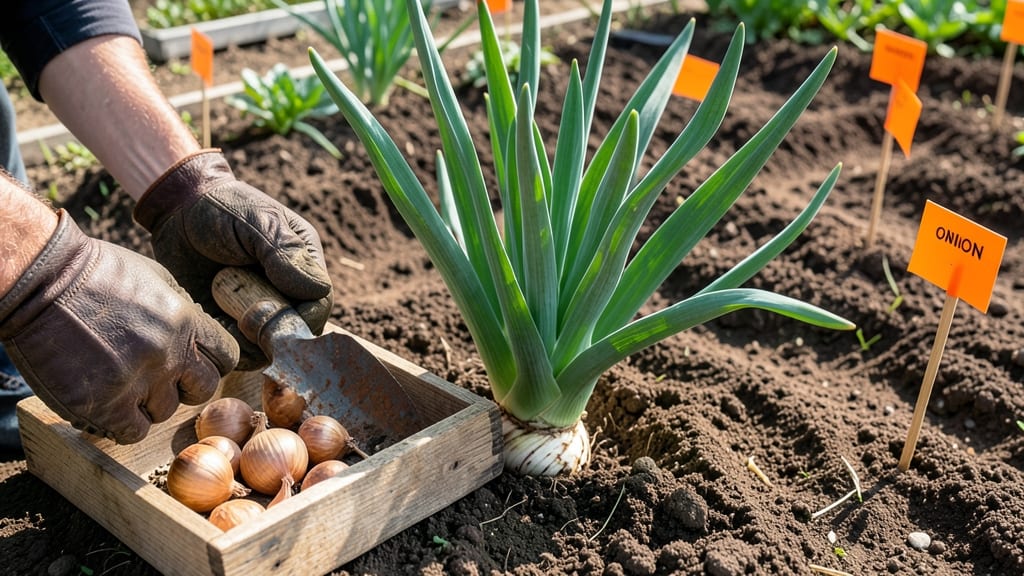
If you’ve ever planted onions 🧅 in Missouri only to watch them bolt into bitter flowers instead of forming sweet bulbs, you’re not alone.
The key to avoiding this common gardening frustration lies in planting them at the perfect time—whether in spring or fall—when soil temperatures and daylight align just right for your USDA 5b-6b zone.
Missouri’s climate can be tricky, with unpredictable frost dates and heat spikes that throw off even the most experienced gardeners.
But by following the ideal planting windows—late March to early April for spring or August to early September for fall—you’ll set your onions up for success, ensuring zero-bolt harvests that taste fresher than anything from the store.
In this guide, I’ll break down the exact timing for both spring and fall plantings, including soil temperature thresholds and regional microclimate tips. You’ll also discover which onion varieties thrive best in Missouri’s 165-day growing season, so you can enjoy a steady supply from June through November.
Ready to transform your garden into an onion powerhouse? Let’s dive into the strategies that will keep your 🧅 harvests sweet, plentiful, and free from bolting disasters.
Best planting times for onions in Missouri: spring vs fall breakdown
Missouri’s USDA zones 5b-6b create unique challenges for onion growers. The key to zero-bolt harvests lies in understanding your last frost date (April 15) and first frost date (October 15). Plant too early, and your onions will bolt from heat stress.
Plant too late, and they won’t mature before winter. Let’s break down the perfect windows for both spring and fall planting.
For spring onions, the magic window is 4-6 weeks before your last frost. In Missouri, that means late March to early April. This timing gives your onions enough time to establish roots before soil temperatures rise above 60°F (15°C), which triggers bolting.
If you’re in northern Missouri (zone 5b), aim for early April. Southern Missouri (zone 6b) gardeners can plant as early as late March.
Fall-planted onions follow a different rule: 8-10 weeks before your first frost. That translates to August to early September in Missouri. These onions will grow slowly through fall, develop bulbs over winter, and be ready to harvest in late May to June.
The advantage? Fall onions often produce sweeter, larger bulbs with fewer pests.
| Planting Window | Best For | Soil Temp Threshold | Harvest Time | Missouri-Specific Tip |
|---|---|---|---|---|
| Late March - Early April | Spring onions | 40-50°F (4-10°C) | June - July | Use mulch to keep soil cool |
| August - Early September | Fall onions | 60-70°F (15-21°C) | Late May - June | Choose intermediate-day varieties |
Missouri’s microclimates add another layer of complexity. If you’re in urban areas like St. Louis, heat islands can push soil temperatures higher, so plant 1-2 weeks earlier than rural zones.
Conversely, higher elevations in the Ozarks may need a 2-week delay to avoid early spring frosts. Always check your local extension office for precise frost dates.
For spring planting, start with onion sets (small bulbs) rather than seeds. Sets sprout faster and give you a head start against Missouri’s unpredictable spring weather.
Plant them ½ inch deep, with 2 inches between plants and 6 inches between rows. This spacing prevents overcrowding and reduces disease risk from humidity.
Fall planting requires soil preparation. Work in compost or aged manure to improve drainage—Missouri’s clay-heavy soils can lead to rot if water doesn’t drain properly. After planting, apply a 2-inch layer of straw mulch to insulate roots from temperature swings between day and night.
Missouri’s spring heat spikes in May and June can turn your onions bitter if they bolt. To prevent this, use shade cloth (30-50%) during peak afternoon sun. For fall onions, row covers in late fall protect young plants from early frosts while allowing sunlight to penetrate.
Pro tip: Test your soil pH before planting. Onions thrive in pH 6.0-7.0. Missouri’s native soils often lean acidic (pH 5.5-6.5), so amend with lime if needed. Aim for a pH of 6.5 for optimal bulb development.
Remember, consistency is key. Onions need 1 inch of water per week, delivered at the soil level (not the leaves) to prevent fungal diseases like downy mildew, which thrives in Missouri’s humid summers. Water in the morning to let foliage dry before evening.
Best planting times for onions in Missouri: spring vs fall breakdown
Missouri’s USDA zones 5b-6b create a unique challenge for onion growers—too early, and your onions bolt (flower prematurely), leaving you with bitter greens instead of sweet bulbs. Too late, and your harvest gets cut short by summer heat or winter frost.
The key? Timing your plantings to align with Missouri’s last frost (April 15) and first frost (October 15) while accounting for regional microclimates like St. Louis’s humidity or Kansas City’s drier air.
For spring onions, the window is tight: aim for late March to early April, about 4-6 weeks before your last frost date. This gives bulbs enough time to mature before Missouri’s summer heat spikes trigger bolting.
Meanwhile, fall onions need a different approach—plant 8-10 weeks before the first frost, typically August to early September, to ensure bulbs fully develop before winter sets in.
| Planting Window | Ideal Months | Soil Temp Threshold | Harvest Window | Key Risk |
|---|---|---|---|---|
| Spring Onions | Late March–Early April | 45–50°F | June–July | Bolting from heat |
| Fall Onions | August–Early September | 50–55°F | October–November | Frost before maturity |
Missouri’s northern regions (e.g., Columbia) have shorter growing seasons, so adjust planting dates 1-2 weeks earlier than the state average. In contrast, southern Missouri (e.g., Springfield) can push spring plantings into mid-April thanks to longer frost-free periods.
Always check your local USDA frost map—even a 10°F difference in soil temperature can mean the difference between a zero-bolt harvest and a failed crop.
Pro tip: Use onion sets (pre-sprouted bulbs) for spring plantings—they sprout faster than seeds and give you a head start against Missouri’s unpredictable spring rains. For fall, short-day onion varieties like ‘Texas Early White’ or ‘Candy’ are your best bet; they’re bred to mature quickly before frost hits.
Avoid long-day varieties like ‘Yellow Sweet Spanish’ unless you’re growing them as green onions (they’ll bolt in Missouri’s climate).
One more critical factor: soil temperature. Onions need consistent soil temps between 45–55°F to thrive. In Missouri’s spring, this means waiting until mid-April when daytime temps stabilize above 60°F. Use a soil thermometer to monitor—planting too early in cold soil leads to poor root development and stunted bulbs.
For fall, aim for August plantings when soil temps drop below 75°F after summer’s peak.
Remember, Missouri’s humidity and clay-heavy soils in many areas can delay soil warming. If your garden stays soggy into April, consider raising beds or planting on mounds to improve drainage and warm soil faster.
The goal? Get those onions in the ground when the soil is warm enough to hold a snowball but cool enough to prevent bolting—a narrow window that pays off with perfect bulbs.