
Plants
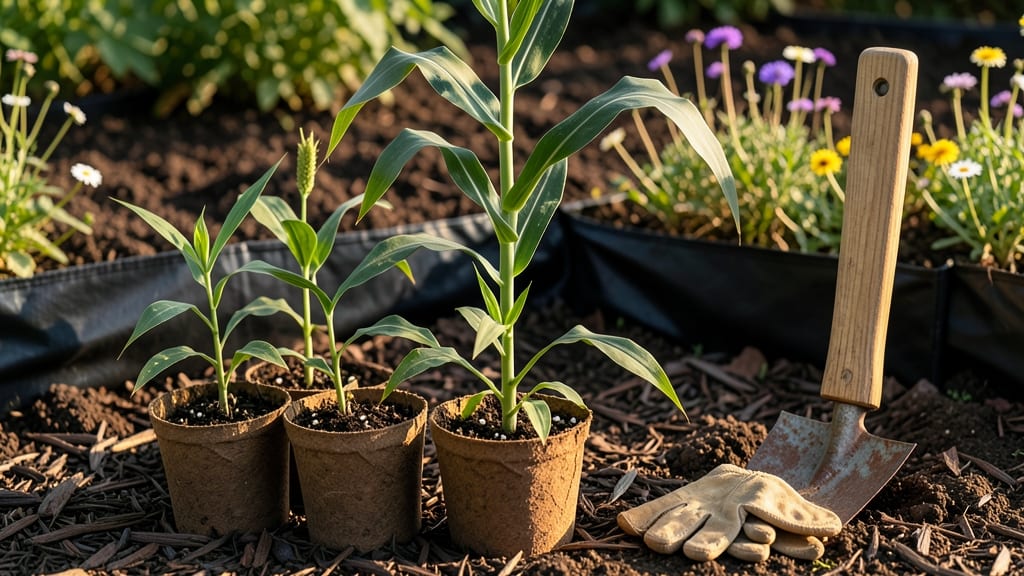
If you're asking "when do you plant corn in Kansas", the answer isn't just about dates—it's about dodging frost, outsmarting drought, and timing soil warmth to perfection.
In USDA Zones 5b-7a, corn planted before April 15 risks frost damage, while waiting too long cuts harvest potential by 20% or more. The 30-day window between mid-April and mid-June exists for a reason: it balances warmth, moisture, and daylight for 🌽 that reaches rooftop heights.
Here's the kicker: Kansas' northern regions (Zone 5b) need soil at 50°F+ before planting, while southern areas (Zone 7a) can start earlier if moisture holds. Skipping this step means seeds rot or sprout too slowly—wasted effort and money.
I've seen firsthand how even a week's delay in Zone 6 can shrink yields by half, especially when summer heat arrives early.
What you'll discover in this guide is how to pinpoint your exact planting window using Kansas Mesonet data, adjust for drought-prone years, and avoid the top 3 mistakes that kill corn crops before harvest. No more guessing—just science-backed timing tailored to your corner of the state.
Ready to turn your corn patch into a Kansas showstopper? Let's break down the frost-free deadlines, soil secrets, and regional tweaks that separate thriving crops from disappointing ones. Your harvest depends on it.
Kansas corn planting dates by USDA Zone (5-7) with frost risk analysis
Kansas spans USDA Zones 5-7, creating distinct planting windows for corn. Northern counties (Zone 5) face later frost risks, while southern areas (Zone 7) can start earlier.
The key is planting when soil temperatures hit 50°F+ and 2-3 weeks after the last frost—but timing varies by 10-14 days across the state.
For sweet corn, aim for mid-April to early May in most of Kansas. Field corn, which takes longer to mature, should go in late April to mid-May. These windows ensure your crop avoids frost damage while maximizing the 165-day frost-free season most of Kansas enjoys.
Here’s how to adjust for your specific zone using Kansas Mesonet data and local frost records:
| USDA Zone | Last Frost Date (Avg.) | Ideal Planting Window | Soil Temp Requirement | Notes |
|---|---|---|---|---|
| Zone 5 (Northwest KS) | April 25 | May 1–15 | 50°F+ (10°C+) | Use row covers for early plantings |
| Zone 6 (Central KS) | April 15 | April 25–May 10 | 50°F+ (10°C+) | Best for early sweet corn |
| Zone 7 (Southeast KS) | March 30 | April 10–25 | 50°F+ (10°C+) | Can plant earlier with black plastic mulch |
If you’re in Zone 5 and experience an early frost warning, delay planting until May 1 to avoid seedling death. In Zone 7, you can push the envelope with late March plantings if you use black plastic mulch to warm the soil faster.
For field corn, which takes 90-120 days to mature, plant 10-14 days earlier than sweet corn to ensure a full harvest before the first frost. This means late April to early May for most of Kansas.
Pro tip: Use the Kansas Mesonet website to check real-time soil temperatures. Aim for 60°F+ at a 4-inch depth for optimal germination. If temperatures dip below 50°F, seeds may rot instead of sprouting.
Remember, early plantings in Zone 5 can still succeed if you use row covers or low tunnels to protect seedlings from late frosts. In contrast, Zone 7 gardeners can experiment with successive plantings every 2 weeks for a continuous harvest.
Always check your local Almanac frost dates—they can vary by 1-2 weeks from the averages above. For example, Hays (Zone 5b) might see frost until May 5, while Pittsburg (Zone 7a) rarely gets frost after March 15.
Planting too early risks seed rot and poor germination, while late plantings may result in smaller ears or stalk rot before harvest. Balance is key!
5 Critical factors that determine your Optimal Corn Planting Time in Kansas
Planting corn in Kansas isn’t just about avoiding frost—it’s about soil temperature, moisture balance, and local microclimates. While the average last frost date (April 15) is a starting point, these 5 critical factors will fine-tune your schedule for maximum success.
Ignore them, and you risk seed rot, poor germination, or even drought stress before harvest. Let’s break it down so you can plant with confidence.
First, soil temperature is non-negotiable. Corn seeds need consistent warmth—ideally 50°F+ at 4 inches deep—to sprout reliably. In Kansas, this usually aligns with mid-April to early May, but northern Zone 5b areas may need to wait until late April.
Use a soil thermometer to verify; cold soil delays germination and invites fungal diseases. Pro tip: If your soil is still chilly, consider black plastic mulch to warm it faster.
Next, seed depth matters more than you think. Plant corn seeds 1-2 inches deep, but adjust based on soil moisture. Dry soil? Plant deeper (up to 2.5 inches) to access moisture. Too wet? Shallow planting (1 inch) prevents seed rot.
Kansas’ variable rainfall means moisture stress is a real threat—especially in Zone 7a, where summer droughts can stall growth. Always check moisture at planting depth before committing.
- 🌡️ Soil Temperature: Wait for 50°F+ at 4" (mid-April to early May). Use mulch to warm soil faster.
- 💧 Moisture Balance: Plant when soil is moist but not soggy. Kansas droughts demand deep watering post-planting.
- 🌾 Seed Depth: 1-2 inches (deeper in dry soil, shallower in wet). Avoid seed rot risks.
- 📊 Kansas Mesonet Data: Check local weather trends (e.g., Hays vs. Wichita) for frost/heat risks.
- ⏳ Variety Maturity: Early-maturing varieties (e.g., Silver Queen) for late May plantings; late-maturing (e.g., Golden Bantam) need earlier starts.
Don’t overlook Kansas Mesonet data, a free tool for hyper-local insights. This network of weather stations provides real-time soil temps, frost probabilities, and drought alerts. For example, Hays (Zone 6b) might see frost until April 20, while Wichita (Zone 7a) could be frost-free by April 10.
Use these reports to adjust your planting window—even by 1-2 weeks—for your specific county. The Kansas State University Extension also offers planting date calculators tailored to your zip code.
Finally, corn variety maturity dictates your planting window. Early-maturing varieties (e.g., Silver Queen, 60-70 days) can handle late May plantings and still reach harvest before Kansas’ first frost (October 15). Late-maturing types (e.g., Golden Bantam, 90+ days) need April plantings to avoid stalk rot from prolonged heat.
Always match your variety to your USDA Zone and last frost date—this is the #1 mistake I see in Kansas gardens.
Pro tip: If you’re planting in Zone 5b (e.g., Salina), err on the side of earlier plantings—even if it means risking a light frost. Corn can tolerate 28°F for short periods, but prolonged cold will stunt growth.
For Zone 7a (e.g., Garden City), you’ve got more flexibility, but drought stress in July/August can still derail yields. Always have a backup irrigation plan.
Ready to plant? Grab a soil thermometer, check the Kansas Mesonet, and mark your calendar for 2-3 weeks after your last frost date. With these factors in mind, you’ll be harvesting plump, sweet ears—not fighting wilting stalks or underdeveloped kernels. Happy planting! 🌽