
Plants
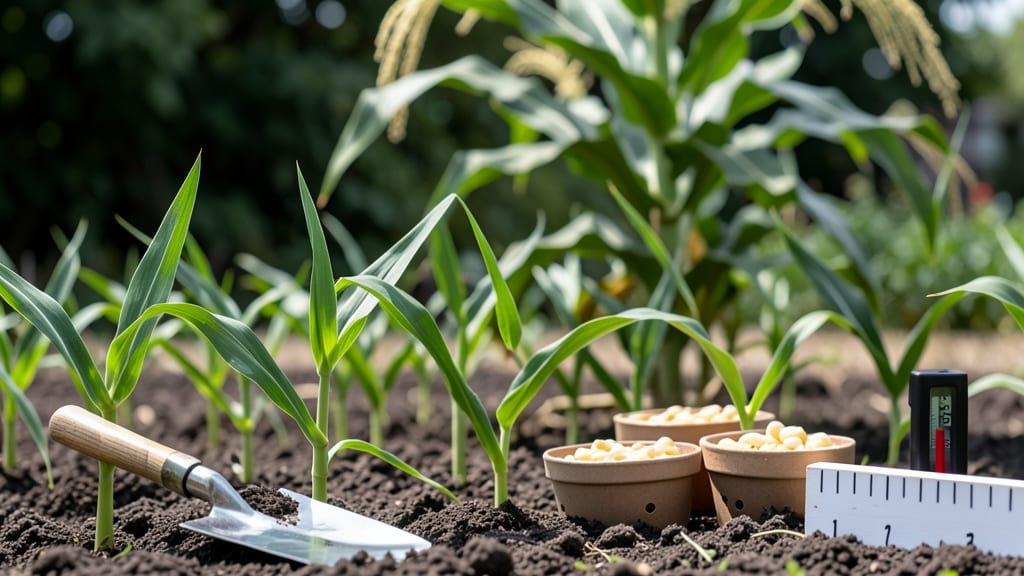
Planting corn in Arkansas isn't just about tossing seeds in the dirt—it's about timing those seeds perfectly to match your local climate and soil conditions.
The difference between a thriving 🌽 cornfield and a struggling one often comes down to understanding your USDA 7a-8b zone and the last frost date in your corner of the state.
Most Arkansas gardeners and farmers know the general rule: mid-April to early June is prime time to get those seeds in the ground. But here's the catch—your exact planting window depends on whether you're in the cooler Ozark Mountains or the warmer Delta region.
Getting it wrong can mean waiting weeks for germination or watching your seedlings wilt in unexpected late frosts.
In this guide, I'll break down the soil temperature secrets that determine when your corn will actually sprout (hint: it's not just about calendar dates).
You'll also learn how to calculate your frost-free window like a pro, so you can choose the right varieties for your short-season or long-season Arkansas growing area.
Whether you're a backyard gardener or a small-scale farmer, these insights will help you maximize your corn harvest—without the guesswork. Let's get those seeds in at the perfect moment!
Best planting dates for Arkansas corn based on soil temperature
Planting corn in Arkansas isn’t a one-size-fits-all task—your local microclimate and soil temperature dictate success. The Ozark Mountains in northern Arkansas (USDA zones 6b-7a) have cooler springs, while the Delta region (zones 7b-8a) warms up faster.
For all areas, soil must reach 50°F+ for germination, but 60°F+ ensures faster growth.
Most Arkansas gardeners aim for mid-April to early June planting, but timing shifts based on corn variety and frost risk.
Early varieties (85-day maturity) can handle cooler soils, while late varieties (120+ days) need warmer conditions. Never plant before the last frost date—tender seedlings won’t survive even light frosts.
Here’s how Arkansas breaks down by region for optimal planting windows:
For high-elevation areas like the Boston Mountains, wait until May 1 to avoid late frosts. In the Delta’s warmer microclimates, you can even plant early sweet corn varieties in late March under row covers. Always check the Arkansas Cooperative Extension’s frost maps for your county’s specifics.
Pro tip: Use a soil thermometer to confirm readiness—corn seeds won’t sprout below 50°F, and growth stalls below 60°F. If your soil is too cold, opt for early-maturing varieties (like Silver Queen) to finish before fall frosts hit.
Once planted, maintain consistent moisture—corn roots need 1-2 inches of water weekly during tasseling (when pollen forms). Drought stress here can reduce yields by 40%. Mulch with straw or grass clippings to retain soil warmth and moisture.
If you’re growing double-crop corn (a rare but possible practice in Arkansas’s long season), plant succession crops every 2 weeks until early June. This stretches your harvest window but requires fertile soil and adequate spacing to avoid competition.
Remember: Late planting (after June 1) risks ear rot from summer humidity, while early planting (before April 1) in cooler zones may lead to stunted plants that can’t recover. Balance is key!
🌽 For real-time updates, bookmark the Arkansas Extension Service’s planting calendar—it adjusts yearly based on weather patterns and local data.
How to calculate your local frost-free window for corn success
Timing your corn planting around Arkansas’s frost-free window is critical—tender seedlings can’t survive even light frosts. The last average frost date in most of Arkansas falls between March 15 (north) and April 1 (south), but microclimates like river valleys or hilltops can shift this by 2+ weeks.
Always verify with your local USDA Plant Hardiness Zone map (Zones 7a-8b in AR).
For corn, I recommend planting 2-3 weeks after your last frost date to ensure soil warms to 60°F+. This buffer accounts for slow soil warming and gives seedlings a fighting chance if an unexpected late frost hits.
Check the Arkansas Cooperative Extension Service frost maps for your county’s historical data—some areas like the Ozark Mountains can have frost until April 20.
🌱
⚠️ Critical Frost Risk for Corn
- Seedlings die at 32°F+—even young plants can’t recover.
- Tasseling stage (6-8 weeks post-planting) is most vulnerable to frost damage.
- Southern Arkansas (Zones 8a-8b) has a 200+ day frost-free season—ideal for late summer varieties.
💡 Pro Tip:
Use row covers or black plastic mulch to warm soil faster and protect early seedlings.
If you’re growing early-maturing varieties (60-85 days), you can push planting to late March in Zone 8b (southern AR). For standard varieties (90-110 days), stick to April 15-May 1 in most regions. In the Ozarks (Zone 7a), wait until May 1 to avoid frost risks entirely.
Extend your growing season with late summer varieties planted in early June. These need 120+ days to mature before the first frost (typically November 15). Use drought-tolerant hybrids like ‘Pioneer 39T23’ for the Delta’s hot, dry summers.
For urban gardeners, check your neighborhood’s microclimate—areas near lakes or buildings may stay 5-10°F warmer than rural fields. Use a soil thermometer to confirm 60°F+ soil temps before planting; cold soil delays germination by 3-5 days.
🌾