
Plants
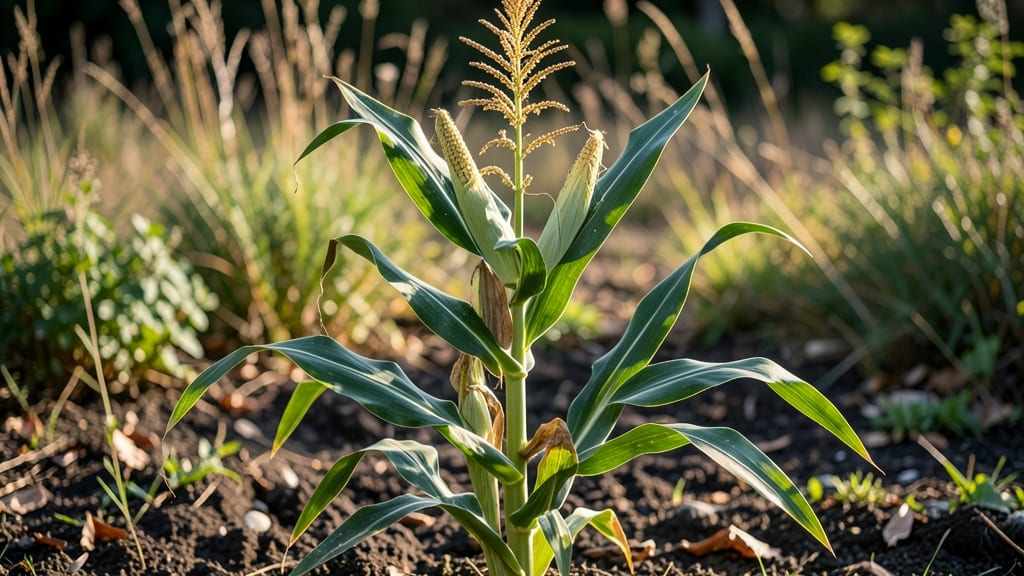
If you’ve ever planted corn and wondered how tall does a corn plant grow, you’re not alone—those towering 🌽 stalks can feel like a surprise every year.
Sweet corn varieties like ‘Golden Bantam’ might stay compact at just 3-5 feet, while field corn can stretch toward 10+ feet, turning your garden into a vertical jungle. The difference?
Variety, soil, and sunlight all play a role in whether your corn will be a modest shrub or a sky-reaching giant.
Most gardeners in USDA Zone 6a expect their corn to hit 6-9 feet by harvest time, but with the right conditions (or the wrong ones), that number can swing wildly. Too little nitrogen? Your stalks might stay short and weak.
Too much shade? They’ll lean like they’re searching for sunlight. The good news? You can tweak these factors to get the height you want—whether that’s a manageable 5-foot patch or a dramatic 10-foot statement piece.
In this guide, I’ll break down the height ranges for popular corn types, how to spot signs of overgrowth or stunted growth early, and simple tricks to keep your corn at your ideal height.
No guesswork—just science-backed tips to help you grow corn that fits your space and your plans. Let’s get started!
Ready to turn your garden into a cornfield (or just a tidy row)? You’ll leave here knowing exactly what to expect—and how to steer your corn toward the perfect height, whether you’re aiming for a basketball-hoop or a backyard forest. The choice is yours!


Corn plant height by variety: from dwarf to giant stalks
Corn height varies dramatically depending on the variety you grow, with some reaching just 3 feet while others tower over 12 feet. The difference isn’t just about aesthetics—it impacts your garden layout, trellising needs, and even harvest accessibility.
Let’s break down the height spectrum so you can choose the perfect fit for your space and goals.
Most sweet corn varieties (the kind you eat fresh) fall between 6 and 10 feet tall.
These are the stalks you’ll find in home gardens and farmers' markets, designed to produce plump, tender kernels. Dwarf varieties, like 'Golden Bantam,' stay compact at 3 to 5 feet, making them ideal for containers or small spaces.
Meanwhile, field corn and experimental hybrids can stretch toward 12 feet or more, resembling small trees.
Here’s what you need to know about height ranges by category, so you can plan your garden with confidence:
| Variety Type | Height Range | Best For | Notes |
|---|---|---|---|
| Dwarf Sweet Corn | 3–5 feet | Containers, small gardens | Early maturity; great for kids' gardens |
| Standard Sweet Corn | 6–10 feet | Home gardens, farmers' markets | Most common; needs space and support |
| Semi-Dwarf Sweet Corn | 5–7 feet | Balconies, raised beds | Hybrid vigor; fewer lodging issues |
| Field Corn | 8–12+ feet | Large farms, ornamental use | Tallest; needs strong trellising |
| Popcorn | 5–9 feet | Home popping, small batches | Drier kernels; shorter than sweet corn |
If you’re growing corn in a container, opt for dwarf varieties like 'Tom Thumb' or 'Golden Bantam.' These stay under 5 feet, making them perfect for balconies or patio gardens.
For traditional gardens, standard sweet corn like 'Silver Queen' or 'Peaches and Cream' will give you that classic 8–10 foot height, but you’ll need to stake or trellis them to prevent lodging (when stalks flop over).
For a dramatic visual impact, consider ornamental corn varieties like 'Glass Gem,' which can reach 10 feet with colorful kernels. These are often grown for their beauty rather than edibility, but they still require the same care as taller sweet corn.
Pro tip: If you’re short on space, try interplanting corn with shorter crops like beans or lettuce to maximize your garden’s vertical and horizontal real estate.
One common mistake is assuming all corn varieties need the same space. Dwarf corn can be planted just 12 inches apart, while standard varieties need 18–24 inches between stalks. Field corn, with its towering height, often requires 36 inches or more to prevent overcrowding.
Always check the seed packet for spacing recommendations—this alone can make or break your corn’s height potential.
Height isn’t just about the stalk, though. The ears of corn also vary in size and placement. Dwarf varieties produce smaller ears higher up on the stalk, while taller corn may have larger ears but lower to the ground.
This affects how you harvest and whether you’ll need a stool or kneeling pad to reach them comfortably. Plan ahead to avoid backaches later in the season!
Finally, remember that genetics aren’t the only factor. Even dwarf corn can grow taller if given ideal conditions—think rich soil, plenty of water, and full sun. Conversely, a standard variety might stay shorter if it’s nutrient-deficient or overcrowded.
We’ll dive deeper into how to optimize height in the next section, but for now, pick a variety that matches your space and goals.
Corn plant height by variety: from dwarf to giant stalks
Corn height varies dramatically depending on the variety you choose. Most home gardeners grow sweet corn, which typically reaches 6–10 feet tall—taller than a basketball hoop! But some varieties can dwarf your expectations (literally), while others stretch toward the sky like skyscrapers.
Let’s break down the height spectrum so you can pick the perfect fit for your garden space.
Dwarf varieties like Golden Bantam or Tom Thumb max out at 3–5 feet, making them ideal for containers or small gardens. These compact plants produce ears just a few feet off the ground, perfect for kids or urban gardeners with limited space.
On the opposite end, field corn and experimental hybrids can soar to 12 feet or more, rivaling small trees!
| Variety Type | Height Range | Best For | Notes |
|---|---|---|---|
| Dwarf Sweet Corn | 3–5 ft | Containers, small gardens | Early harvest, great for kids |
| Semi-Dwarf Sweet Corn | 5–7 ft | Backyard gardens, trellising | Balanced height for easy access |
| Standard Sweet Corn | 6–10 ft | Traditional gardens, large plots | Most common variety |
| Field Corn/Popcorn | 8–12+ ft | Large farms, ornamental use | Tall stalks, drought-tolerant |
If you’re growing corn in a small space, opt for dwarf varieties like ‘Little and Large’ or ‘Golden Midget’. These stay under 5 feet and produce ears just above waist height.
For traditional gardens, standard varieties like ‘Silver Queen’ or ‘Peaches and Cream’ will thrive, reaching 7–10 feet—just be prepared to stake them if winds are strong!
Pro tip: Check the seed packet for height estimates—some modern hybrids are bred for compact growth. For example, ‘Bodacious’ is a semi-dwarf that tops out at 6 feet, perfect for trellising or saving space. Meanwhile, ‘Country Gentleman’ can stretch to 10 feet, ideal for rustic, old-fashioned gardens.
Height isn’t just about aesthetics—it also affects harvesting ease. Taller corn may require a sturdy ladder or even a harvesting pole to reach the top ears.
If you’re growing corn for popcorn, field corn varieties like ‘Glass Gem’ (though colorful, not always tall) or ‘Country Gold’ can reach 10+ feet, so plan your garden layout accordingly.
🌽