
Plants
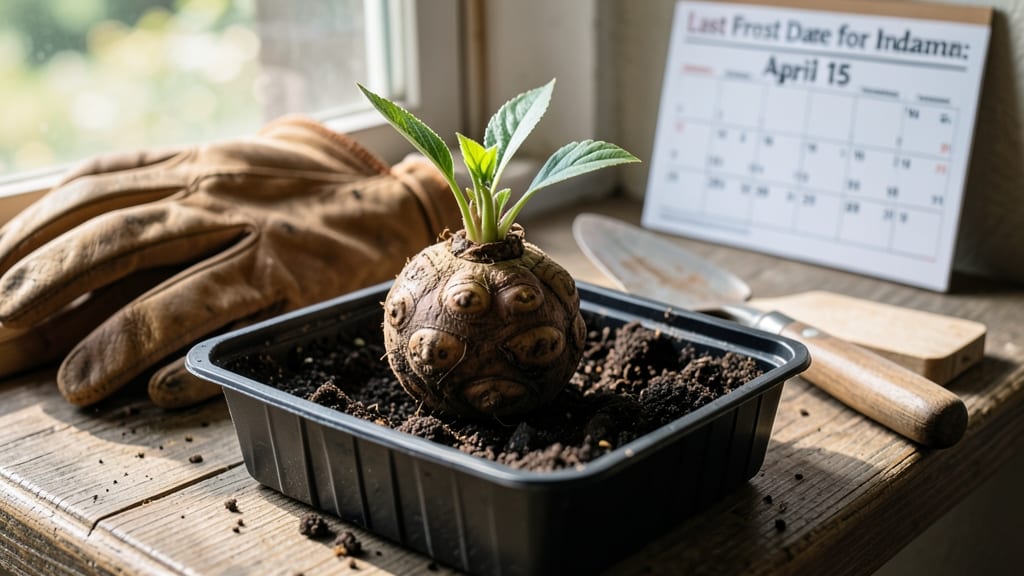
Optimal dahlias planting dates in Indiana (Zone 5b-6a guide)
Indiana’s Zone 5b-6a climate means dahlias thrive when planted after the last frost—typically mid-to-late May. Northern Indiana (Zone 5b) has a slightly shorter growing season, while Southern Indiana (Zone 6a) enjoys an extra 2-3 weeks.
Aim for soil temperatures of 60°F+ and 1,200+ growing degree days to ensure strong tuber establishment.
Missed the outdoor window? Start tubers indoors in March (8-10 weeks before last frost) or use containers with frost blankets for early outdoor planting. This head start compensates for Indiana’s unpredictable spring frosts, which can occur as late as May 15 in colder microclimates.
🌱
| Stage | Action | Indiana Timeline (Zone 5b-6a) |
|---|---|---|
| Prep Tubers | Cut tubers, treat cuts with fungicide, start chitting (if indoors) | Mid-March to early April |
| Indoor Start (Optional) | Plant in pots with heat mat (65°F+ soil) | Late March (8-10 weeks before last frost) |
| Outdoor Planting | Transplant after last frost when soil is 60°F+ | Mid-to-late May (Zone 5b: May 15-30; Zone 6a: May 1-15) |
| Frost Protection | Use row covers or cloches for early plants | Until June 1 (Northern IN) |
| Peak Blooms | Full sunlight (6+ hours), consistent water | July to first frost (October 15) |
For Northern Indiana gardeners, prioritize early-maturing varieties like 'Café au Lait' (60 days to bloom) to beat the shorter growing season. Southern Indiana growers can experiment with taller varieties like 'Thomas Edison' (90+ days), which reward patience with 6-foot stems and late-season blooms through October.
Pro tip: Use black plastic mulch to warm soil faster in cooler zones. This raises soil temps by 5-10°F, accelerating tuber growth and advancing bloom time by 2-3 weeks. Just remove it once plants are established to prevent overheating.
🌿
Watch for Indiana-specific pests like Japanese beetles and slugs, which target stressed dahlias. Plant marigolds nearby as a natural deterrent, or apply neem oil preventatively. Early planting gives roots time to establish before pest pressure peaks in late June.
Remember: Dahlias are tender perennials—they’ll die back with frost but return if tubers survive. In Indiana’s Zone 5b-6a, dig and store tubers after first frost (October 15) to replant next spring. Mark your calendar now!
☀️
How to prepare dahlias for Indiana’s unpredictable spring weather
Indiana’s spring weather is famously fickle—one day warm and sunny, the next a surprise frost. To give your dahlias the best start, prepare tubers indoors 4-6 weeks before your target outdoor planting date. This head start helps them outpace late frosts while avoiding the stress of transplant shock.
Start by inspecting your dahlia tubers for soft spots or mold. Discard any damaged tubers immediately, as they won’t survive planting. Healthy tubers should feel firm and slightly wrinkled, with eyes (sprout points) visible.
Store them in a cool, dry place (like a basement) until you’re ready to begin the chitting process—placing them in trays with just enough moisture to encourage sprouting.
Soil temperature is critical in Indiana. Dahlias thrive when soil reaches at least 60°F (15°C)—a rule of thumb is to wait until mid-to-late May for most of the state. Use a soil thermometer to check, especially in Northern Indiana where frosts linger longer.
If your soil is still chilly, plant in containers or use black plastic mulch to warm the ground faster.
Planting too early in Northern Indiana (Zone 5b) risks frost damage. Even hardened tubers can suffer if nighttime temps drop below 50°F (10°C). Southern Indiana (Zone 6a) has a slightly longer window, but never plant before May 1 unless you’re using frost cloths.
Common mistake: Burying tubers too deep. Dahlias need 2-3 inches of soil over the tuber, but deeper planting delays sprouting. Mark your planting spots with stakes to avoid over-deepening.
Amend your soil with compost or well-rotted manure to improve drainage—dahlias hate soggy roots. In Indiana’s heavy clay soils, mix in sand or perlite to prevent waterlogging. A balanced fertilizer (5-10-10) at planting time provides essential nutrients without overwhelming the tubers.
Space plants 12-24 inches apart, depending on the variety’s mature size, to allow airflow and reduce fungal diseases like powdery mildew.
After planting, mulch heavily with straw or shredded leaves to retain moisture and protect against temperature swings. In early June, when danger of frost has passed, apply a slow-release fertilizer to support robust growth.
Monitor for slugs and earwigs, which are common in Indiana’s humid summers—use organic slug bait or diatomaceous earth as a preventative measure.
For late bloomers, consider succession planting in early June. Choose dwarf varieties like ‘Mignon’ or ‘Bishop’ for containers, which can be moved indoors before the first frost.
With proper prep, your dahlias will reward you with months of vibrant blooms from July through October—making Indiana’s unpredictable spring worth the effort! 🌸