
Plants
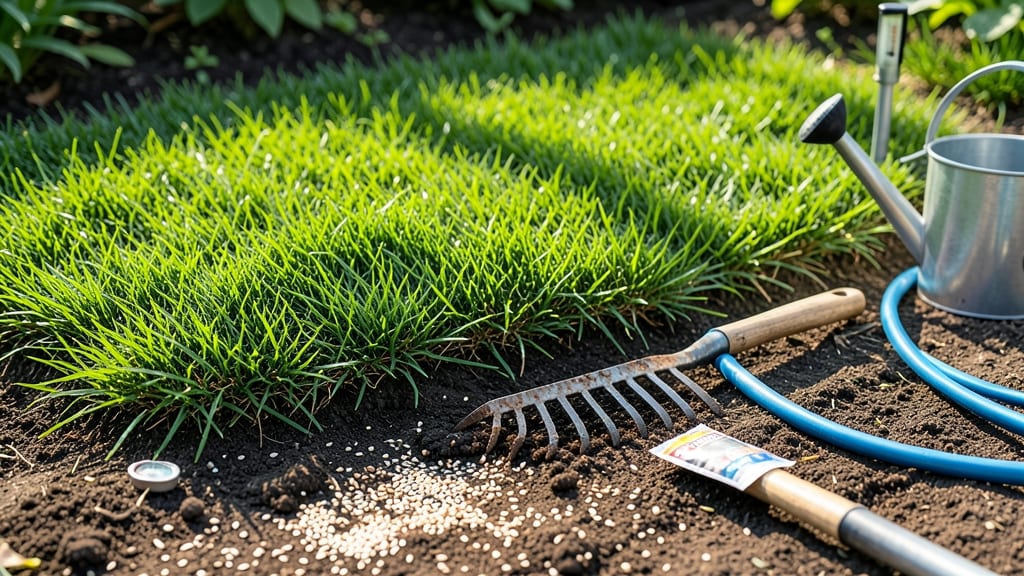
Timing your Bermuda grass seed planting in Georgia isn't just about the calendar—it's about beating the heat while avoiding frost risks that can turn your green dreams to dust. 🌱 With Georgia's 7b-8b climate, planting too early means seedlings get fried by summer's first 90°F blast, while waiting too long leaves your lawn vulnerable to weeds and drought stress.
Most gardeners swear by late spring to early summer (April-June) as the sweet spot, but there's actual science behind those dates. We're talking soil temperatures hitting 65°F+ and consistent moisture—critical factors that determine whether your grass takes root or just wilts under Georgia's relentless sun.
What you're about to discover isn't just random advice—it's a heat tolerance strategy that accounts for Georgia's microclimates, from the coastal humidity to the Piedmont's dry spells.
I'll walk you through exactly when to plant, how to prep your soil for summer survival, and the watering schedule that keeps your grass thriving when temperatures soar.
Skip the guesswork and get the step-by-step plan that turns your Georgia lawn from patchy to picture-perfect—without the common mistakes that kill most Bermuda grass seeds before they even sprout.
Best planting windows for Georgia Bermuda grass seed: late spring heat tolerance timeline
Georgia’s Bermuda grass thrives in heat but needs precise timing to avoid frost damage or heat stress. The optimal planting window spans late April to early June, when soil temperatures consistently hit 65°F+.
This aligns with Georgia’s USDA Zones 7b-8b, where coastal areas warm earlier than the Piedmont or mountains.
For coastal Georgia (e.g., Savannah, Brunswick), start planting by mid-April when nighttime lows stay above 50°F. In the Piedmont region (Atlanta, Macon), wait until late April to early May to avoid late frosts. Mountain areas (e.g., Blue Ridge) should delay until mid-May when frost risk drops below 10%.
🌱Pro Tip: Use a soil thermometer to confirm 65°F+ soil temps at 4-inch depth before planting. Bermuda grass seeds won’t germinate below 60°F, and early planting risks frost kill.
| Georgia Region | Optimal Planting Window | Soil Temp Threshold | Frost Risk |
|---|---|---|---|
| Coastal (Savannah, Brunswick) | Mid-April to early May | 65°F+ at 4" | Low (after March 15) |
| Piedmont (Atlanta, Macon) | Late April to early June | 65°F+ at 4" | Moderate (late April) |
| Mountains (Blue Ridge) | Mid-May to early June | 65°F+ at 4" | High (until May 15) |
| Northwest (Columbus, Rome) | Late April to May | 65°F+ at 4" | Moderate (late April) |
🌡️ Heat Tolerance Note: Bermuda grass seeds germinate best at 75-85°F—plant when daytime highs reach 80°F+ for faster establishment.
While late spring is ideal, some gardeners attempt fall planting (August-September) for a second growth cycle. However, this risks heat stress if planted too late, as seedlings struggle to establish before first frost (November 15).
For fall planting, aim for early August when daytime temps drop below 90°F.
🌱Key Insight: Bermuda grass is dormant in winter but needs 6-8 weeks of warm soil to establish roots. Planting in June may work in coastal areas but risks overheating in inland regions. Always prioritize soil temperature over calendar dates.
To extend your planting window, use black plastic mulch to warm soil faster in early spring or shade cloth to protect seedlings from 90°F+ heat in late summer. These techniques let you adjust by 2-3 weeks earlier or later, depending on microclimate.
🌡️Temperature
Soil preparation and heat resistance techniques for Georgia Bermuda grass seedlings
Bermuda grass thrives in Georgia’s heat, but seedlings need extra protection during those 90°F+ spikes. The key to success lies in soil prep that mimics its natural drought-resistant traits. Start by testing your soil’s pH (6.0-7.0)—Bermuda grass prefers slightly acidic to neutral conditions.
If your soil is too alkaline, mix in sulfur or peat moss to adjust it before planting.
Next, focus on organic matter content. Aim for 2-3% organic matter to improve water retention and root development. Work in compost or well-rotted manure 4-6 inches deep, but avoid fresh manure—it can burn delicate seedlings.
For sandy soils common in Georgia, add peat moss or coconut coir to help retain moisture during dry spells.
🌱
🌱 Key Takeaways for Heat-Resistant Bermuda Grass
- Soil pH: 6.0-7.0 (test and adjust with sulfur if needed)
- Organic Matter: 2-3% (compost or peat moss for sandy soils)
- Watering: Deep soakings (1 inch) in morning only to prevent fungal growth
- Mulching: Light straw layer (½ inch) to shield seedlings from direct sun
- Avoid: Synthetic fertilizers before planting (can burn seeds)
Watering strategy is critical for heat resistance. Bermuda grass seedlings need consistent moisture, but overwatering causes root rot. Water deeply once per day in the morning (before 10 AM) to allow the soil to dry slightly between waterings.
Use a soaker hose or drip irrigation to deliver water directly to the roots, reducing evaporation. For the first 3 weeks, keep the soil evenly moist—not soggy.
Mulching plays a surprising role in heat protection. Apply a light layer of straw (½ inch) after planting to shield seedlings from intense afternoon sun.
This mulch also helps retain soil moisture and regulates temperature fluctuations. Avoid thick mulch layers, as they can smother young grass and trap too much heat.
Finally, consider shade cloth for the first 2 weeks if planting in peak summer. A 30-50% shade cloth reduces stress on seedlings while they establish roots.
Remove it gradually to harden off the grass before full sun exposure. This step is especially helpful in coastal Georgia, where humidity adds to heat stress.
With these techniques, your Bermuda grass seedlings will thrive in Georgia’s heat and develop the deep root system needed for drought resistance. The secret? Preparing soil like a pro and protecting young plants from extreme conditions until they’re strong enough to handle the sun.