
Plants
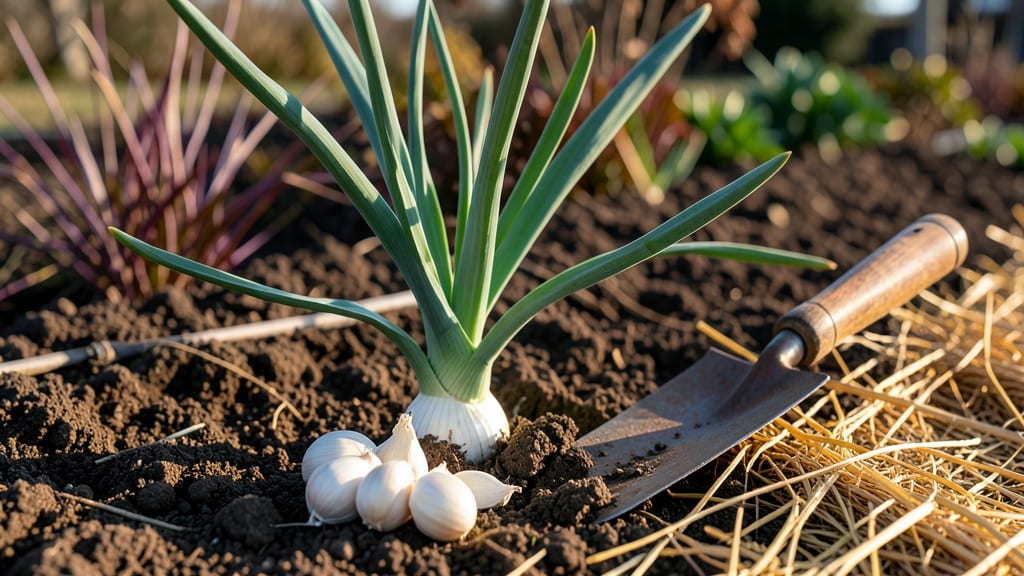
Timing your 🧄 garlic planting just right in fall could mean the difference between a disappointing harvest and bulbs so plump you’ll swear they’re store-bought—except they’re not.
The key lies in those 4-6 weeks before first frost, a window that might seem short but is actually your garlic’s golden ticket to thriving through winter.
Here’s the thing: planting too early and the cloves might rot; too late and they won’t establish strong roots before the ground freezes.
In USDA Zone 6a, that means aiming for mid-October, but your exact timing depends on your local frost dates and whether you’re growing hardneck or softneck varieties. Get it wrong, and you’re left with weak stalks—or worse, no harvest at all.
I’ve learned the hard way that fall planting isn’t just about dropping cloves in the dirt and hoping for the best. It’s about preparing your soil, spacing those cloves just right, and giving them the perfect head start before winter sets in.
The payoff? Larger bulbs, better flavor, and a garden that rewards your patience come summer.
Ready to master the timing? Let’s break down exactly when to plant, how to adjust for your climate, and the simple steps that’ll set you up for a harvest worthy of bragging rights. Your future meals—and your wallet—will thank you.
The exact fall planting window for garlic by USDA zone
Timing is everything when planting garlic in the fall—aim for 4 to 6 weeks before your first frost date. This window ensures cloves establish strong roots before winter dormancy, leading to larger bulbs next summer.
But with USDA zones 3 through 10 having wildly different frost dates, knowing your zone is critical.
For example, in Zone 3 (e.g., Minnesota, Maine), you’ll plant in early to mid-October, while gardeners in Zone 10 (e.g., Southern California) can wait until late November. Even within a zone, microclimates (like valleys or coastal areas) can shift the ideal window by 2 to 4 weeks.
Here’s the golden rule: Soil temperature should be below 40°F (4°C) but not yet frozen. Use a soil thermometer to check—garlic cloves need 6 to 8 weeks of cold to form bulbs properly.
Planting too early (when soil is still warm) can trigger premature sprouting, while planting too late risks frozen cloves.
Hardneck varieties (like ‘Music’ or ‘German White’) thrive in colder zones (3–7) and need a longer cold period (90+ days below 40°F). Softneck types (like ‘Silverskin’ or ‘Artichoke’) tolerate milder winters (zones 7–10) and can handle shorter chilling.
Pro tip: Check your local frost dates via the National Weather Service or Almanac’s Frost Calculator. Subtract 6 weeks from your first frost date to pinpoint your planting window. For instance, if frost hits November 15, plant by early October.
🌱
🌱 Fall Garlic Planting by USDA Zone
| Zone | Ideal Planting Month | First Frost Target | Best Varieties |
|---|---|---|---|
| 3–4 | Early September | Mid-October | Hardneck (e.g., ‘Chef’, ‘Korean Red’) |
| 5–6 | Mid-October | Early December | Hardneck (e.g., ‘Music’, ‘Silverskin’) |
| 7–8 | Late October–November | Mid-January | Softneck (e.g., ‘Artichoke’, ‘Creole’) |
| 9–10 | November–December | No frost (plant by Dec 1) | Softneck (e.g., ‘California Early’, ‘Inchelium Red’) |
⚠️ Adjust 2 weeks earlier for high-altitude areas or 2 weeks later for coastal/mild zones.
If you’re in a warmer zone (9–10), garlic planted in fall may not get enough chill hours to bulb properly. In these areas, consider spring planting (February–March) for softneck varieties, which store better but produce smaller bulbs.
For colder zones (3–5), prioritize hardneck garlic—it handles harsh winters and produces larger cloves and scapes. In zones 6–8, you can experiment with both types, but hardnecks often yield better in shorter winters.
Always plant pointy-end up (the root grows from the flat side) and space cloves 4–6 inches apart in rows 12 inches apart. This spacing prevents crowding and fungal diseases like white rot, which thrives in damp, congested soil.
🌿
The exact fall planting window for garlic by USDA zone
Garlic thrives when planted in fall, but timing varies dramatically by USDA zone. The golden rule? Aim for 4–6 weeks before your first frost date—this gives cloves time to root before winter dormancy.
In Zone 3–5, that’s typically mid-September to early October, while Zones 6–10 can plant until November or even December if the ground isn’t frozen.
Why this window? Garlic needs cold stratification (60+ days below 40°F) to form bulbs, but it must avoid freezing soil.
Plant too early, and cloves rot; too late, and they won’t establish roots. Hardneck varieties (like Rocky Mountain or Silverskin) handle colder zones better than softneck types (e.g., Artichoke), which need milder winters.
| USDA Zone | Ideal Planting Month | Key Notes | Best Varieties |
|---|---|---|---|
| 3–5 | Mid-Sept to Oct 15 | Cold-hardy; use hardneck types | German White, Music |
| 6–7 | Oct 1–Nov 1 | Flexible window; avoid frost | Chesnok Red, Inchelium Red |
| 8–10 | Nov 1–Dec 15 | Milder winters; softneck preferred | Silverskin, Artichoke |
Check your local frost dates (via Almanac.com) and count backward. For example, if your first frost is November 15, plant by October 1.
In warmer zones (8–10), you can push planting to December, but ensure soil temps stay above 40°F—use a soil thermometer if unsure.
Pro tip: Test soil moisture before planting. Cloves need well-draining soil—amend with compost if your soil is clay-heavy. Mulch with straw (not leaves!) after planting to insulate roots through winter. Avoid synthetic mulches, which can suffocate cloves.
Need flexibility? Stagger planting in 2-week intervals to extend harvest time. For instance, plant half your cloves in early October and the rest in mid-October—this spreads out your mid-summer harvest by weeks. Just ensure all cloves are in the ground at least 6 weeks before frost.
Remember: Garlic planted in fall develops larger bulbs than spring-planted garlic because it undergoes natural cold exposure. Skip the rush—patience now = bigger harvests later! 🧄