
Plants
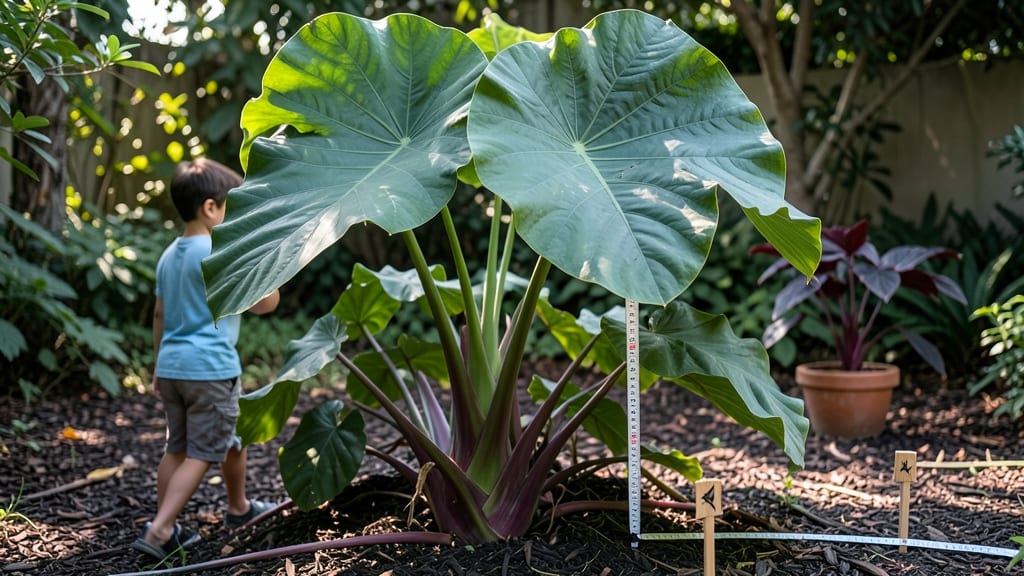
Elephant ear plant height guide by variety: from compact to towering giants
Elephant ear plants (Colocasia spp. and Alocasia spp.) are known for their bold, tropical foliage, but their mature heights can vary dramatically depending on the variety. Some stay compact enough for containers, while others become towering statement plants that dominate garden beds.
Understanding these differences helps you choose the perfect fit for your space—whether you're working with a small patio or a sprawling backyard.
Most elephant ear varieties fall into three height categories: dwarf (2–3 feet), medium (3–5 feet), and tall (5–6+ feet). The key to predicting height lies in selecting the right cultivar and providing optimal growing conditions.
Below, I’ve broken down the most popular types, including their mature sizes, growth habits, and ideal spacing to help you plan your garden layout.
🌿
If you're growing elephant ears in containers, opt for dwarf varieties like 'Black Stem' or 'Polly', which thrive in 12–18 inch pots. For garden beds, medium-height varieties such as 'Illustris' or 'Zebrina' create stunning focal points when spaced 2–3 feet apart.
The tallest varieties, like 'Blue Shadow', need at least 4 feet of clearance and should be planted near fences or walls to support their dramatic foliage.
Remember, height isn’t the only factor—leaf size and spread also play a role in how these plants fill your space. For example, 'Pink China' may only reach 4–5 feet but spreads aggressively, while 'Blue Shadow' grows taller but stays more compact in width.
Always check the specific variety’s care tags for precise guidance, as growing conditions (like sunlight and soil fertility) can influence final height by up to 20%.
For gardeners in USDA Zones 8–11, most elephant ears are perennial and will return year after year, gradually increasing in size. In colder climates (Zones 6–7), treat them as annuals or dig up tubers before frost to overwinter indoors.
This ensures you’re not surprised by their mature height when spring rolls around!
🌱
How fast do elephant ear plants grow? Seasonal growth patterns explained
Elephant ear plants (Colocasia spp.) are famous for their rapid growth once established, but their speed depends heavily on the season and variety. In ideal conditions, these tropical beauties can shoot up 2-3 feet in a single growing season, transforming from small tubers into lush foliage giants.
The key growth window is spring to early fall, when warm temperatures and consistent moisture fuel their expansion.
Most varieties experience their fastest growth between May and July, when soil temperatures stay above 60°F. During this peak period, expect new leaves to unfurl weekly, with mature plants adding 1-2 feet of height per month.
However, growth slows dramatically in late summer and fall as temperatures drop and daylight shortens, signaling dormancy for many varieties.
🌱 Did you know? Some aggressive growers like Colocasia 'Black Magic' can reach 6 feet in just 3 months under perfect conditions, while slower varieties like Colocasia 'White Queen' may take 6-8 weeks to reach half their mature height.
- Spring (April-June): Tubers sprout, rapid leaf production begins. Growth rate: 1-2 ft/month
- Summer (July-August): Peak growth phase. Growth rate: Up to 3 ft/month for aggressive varieties
- Fall (September-October): Growth slows as temps drop. Growth rate: 0.5-1 ft/month
- Winter (November-March): Dormant in colder zones. Growth rate: 0 ft (tuber rests)
Your elephant ear's final height isn't just about time—it's also about light exposure, soil fertility, and water consistency. Plants in full shade may grow 20-30% slower than those in bright, indirect light, while rich, moist soil can accelerate growth by up to 50%.
Overcrowded tubers or poor drainage, however, can stunt height significantly.
For gardeners in USDA Zones 8-11, elephant ears grow year-round with minimal slowdowns, while those in Zones 6-7 will see dramatic growth spurts in summer followed by winter dormancy. Even in colder climates, container-grown plants can achieve 80% of their mature height in a single season with proper care.
💡 Quick Tip: Measure your plant's height every 4 weeks during peak season. If growth stalls after 2 months, check for nutrient deficiencies (yellowing leaves) or root-bound conditions (if in containers). A balanced fertilizer like 10-10-10 applied every 4-6 weeks can reignite rapid growth.