
Plants
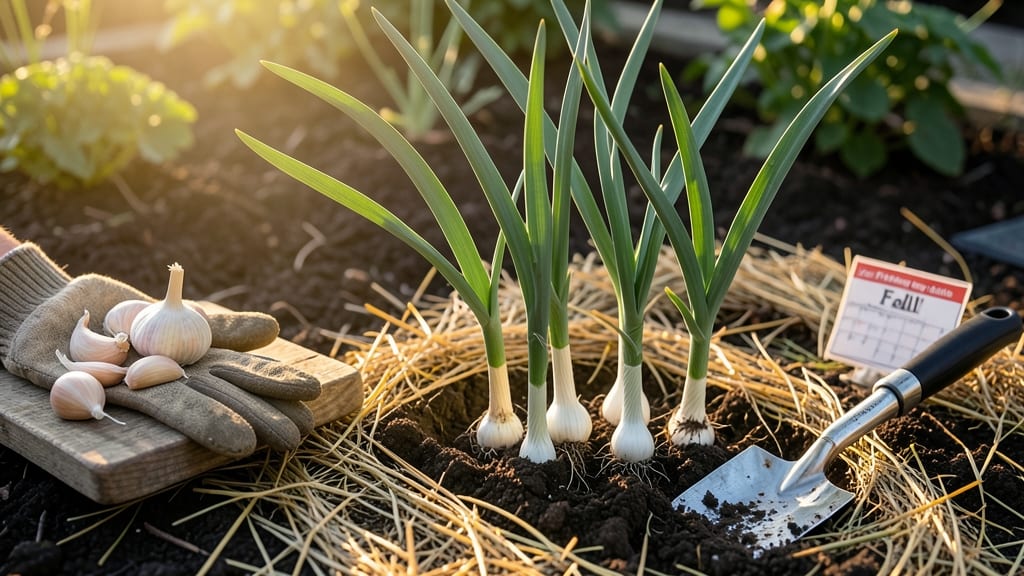
If you're dreaming of a bountiful harvest of 🧄 garlic next summer, timing your planting in New Mexico is everything. Planting too early or late can mean the difference between plump, flavorful bulbs and disappointing shriveled cloves.
The key? Getting those cloves in the ground during October or November, when the soil is cool but still workable.
New Mexico's high desert climate and varying elevations make this a little trickier than other regions. Whether you're in Albuquerque's USDA Zone 7 or Santa Fe's cooler Zone 6, understanding your local frost dates is the first step to success.
I'll walk you through exactly when to plant for your specific microclimate, so you can avoid common mistakes that waste your time and effort.
You might think garlic is garlic, but different varieties have different needs. Some types thrive better in the high country, while others do better in the valley.
I'll break down the best planting windows for popular varieties like German White and Music, so you can choose what works best for your garden. Let's get those cloves in the ground at the perfect time for maximum harvest potential.
Ready to grow garlic that's the envy of every gardener in the state? The secret starts with knowing exactly when to plant. I'll show you how to read your local climate cues and adjust your timing for the most successful garlic crop you've ever grown.
Let's make next year your best harvest yet.
Best planting windows for New Mexico garlic by variety type
New Mexico’s high desert climate and elevation variations (from 5,000 to 7,000 feet) create unique challenges for garlic growers. Unlike coastal regions, our short winters and long, dry growing seasons demand precise timing.
Planting too early risks premature bolting, while late planting may result in small, underdeveloped bulbs. The key? Understanding your USDA zone and garlic variety type.
Most New Mexico gardeners focus on two garlic types: hardneck and softneck. Hardnecks thrive in colder climates and produce flavorful scapes, while softnecks prefer milder winters and store longer.
For our state, hardneck varieties (like 'German White') are ideal above 6,000 feet, while softnecks (like 'Silverskin') work better in lower elevations near the Rio Grande Valley.
Here’s the golden rule: Plant garlic 4-6 weeks before the ground freezes—typically mid-October to November in most of New Mexico. This timing ensures bulbs establish roots before winter dormancy.
However, high-altitude areas (e.g., Taos) may need to plant as early as late September, while lower elevations (e.g., Las Cruces) can wait until early November.
Spring planting is possible but risky in New Mexico. If you miss the fall window, plant in early February for a smaller harvest. Spring-planted garlic often bolts quickly due to our intense summer heat, reducing bulb size and quality.
Pro tip: Check your local first frost date (e.g., Albuquerque: Nov 15, Santa Fe: Oct 30) and plant 6 weeks prior. For example, if frost hits November 15, aim for a October 1 planting.
Use a soil thermometer to confirm ground temps are below 40°F—garlic needs cold dormancy to form bulbs.
🌱
| Variety Type | Best Planting Window | USDA Zones | Notes for NM |
|---|---|---|---|
| Hardneck (e.g., 'German White', 'Music') | Mid-October to November | 6-8 (5,000–7,000 ft) | Best for high desert; produces scapes (harvest in May). |
| Softneck (e.g., 'Silverskin', 'Artichoke') | Early November to December | 7-9 (below 5,000 ft) | Ideal for Rio Grande Valley; stores longer but fewer scapes. |
| Spring-Planted (Risky) | Early February | All zones | Smaller bulbs; high bolting risk in summer heat. |
For high-altitude gardeners (e.g., Santa Fe, Taos), prioritize hardneck varieties like 'Music' or 'Chet’s German Red'. These varieties handle colder winters and produce bold, flavorful bulbs. In contrast, lowland areas (e.g., Albuquerque, Las Cruces) can experiment with softneck garlic, which stores well for up to 12 months.
One common mistake? Planting whole garlic bulbs instead of separating cloves. Break bulbs into individual cloves (keep the papery skin intact) and plant the pointy end up, 2 inches deep. Space cloves 4-6 inches apart in rows 12 inches apart to allow airflow and prevent disease.
After planting, mulch heavily with straw or leaves (4-6 inches) to insulate bulbs through winter. This protects against temperature swings and soil heaving, which can damage emerging shoots. Remove mulch in early spring to encourage growth.
🌿
Remember: Garlic is a cool-season crop, and New Mexico’s short winter means every day counts. By aligning your planting window with your local frost dates and elevation, you’ll maximize bulb size and flavor.
For example, 'German White' planted in late October in Albuquerque will yield large, pungent bulbs ready for harvest in June or July.
How to adjust planting for New Mexico’s microclimates and soil conditions
New Mexico’s diverse elevations and microclimates mean your garlic’s planting window can shift dramatically between Albuquerque’s high desert and the Rio Grande Valley. At higher elevations (5,000–7,000 ft), like Santa Fe, plant garlic by late September to avoid early freezes.
In lower desert areas (4,000 ft or below), like Las Cruces, you’ve got until mid-November—but watch for sudden cold snaps!
Soil moisture is critical—New Mexico’s dry climate can cause garlic to bolt prematurely if stressed. Amend your soil with 2–3 inches of compost before planting to retain moisture. If your soil is sandy (common in the Chama Valley), mix in organic matter like leaf mold to improve water retention.
In clay-heavy areas (like parts of the Mesilla Valley), add perlite or coarse sand to prevent compaction.
Your irrigation method also affects timing. Drip irrigation lets you plant 2 weeks later than flood irrigation because it delivers consistent moisture. If you rely on rainfall-only, plant garlic by mid-October to ensure adequate winter moisture. In drought-prone years, consider mulching heavily with straw to protect cloves from desiccation.
Garlic planted too early (before October) or in hot microclimates (like near blacktop or pavement) may bolt. Watch for flower stalks—if they appear, harvest green garlic immediately or remove stalks to redirect energy to bulb formation.
In USDA Zone 7b (e.g., Albuquerque), avoid planting before October 1st. In Zone 6a (e.g., Taos), plant by September 15th to prevent winter kill.
Adjust your timing based on local frost patterns. Check the National Weather Service for your area’s first hard freeze date. Aim to plant garlic 4–6 weeks before the ground freezes—this gives cloves time to establish roots before dormancy.
For example, in Roswell (Zone 7a), plant by October 20th, while in Silver City (Zone 7b), you can wait until November 1st.
Test your soil’s pH (6.0–7.0 ideal) before planting. New Mexico’s alkaline soils (common in the Pecos Valley) can stunt garlic growth. If your pH is above 7.5, amend with elemental sulfur or peat moss 4–6 weeks before planting.
A simple soil test kit (available at local nurseries like Albuquerque’s Native Sons Nursery) makes this easy.
Finally, rotate planting locations every 3–4 years to prevent disease buildup. New Mexico’s hot summers can leave soil harboring fungal pathogens like white rot.
If you’re planting in the same spot, solarize the soil in late summer by covering it with clear plastic for 4–6 weeks to kill pathogens before garlic goes in.