
Trees
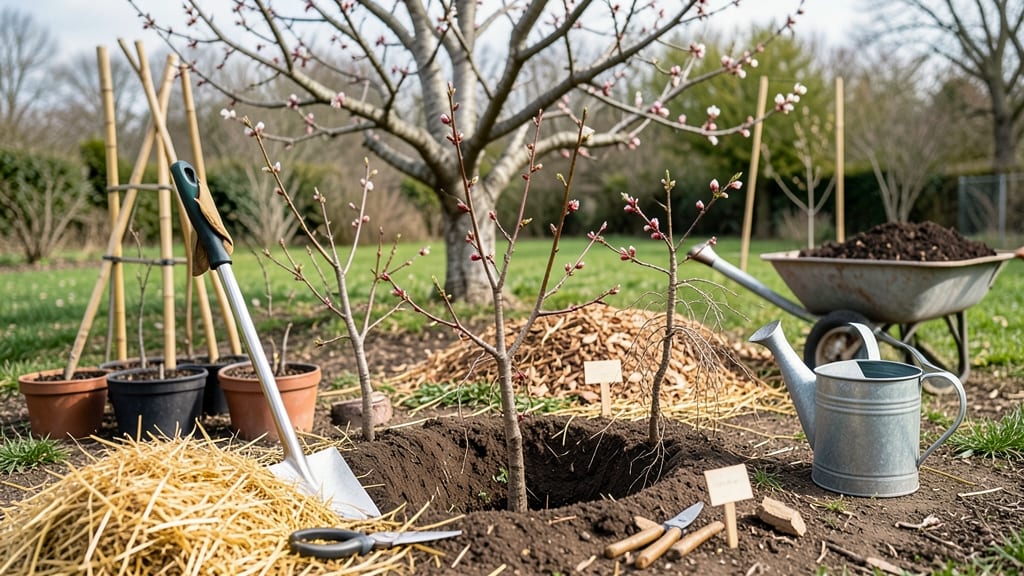
Timing your fruit tree planting in Wisconsin isn't just about picking a month—it's about giving your 🍎 trees the best shot at thriving through brutal winters and unpredictable springs.
If you plant too early, young roots can freeze before establishing. Too late, and your trees might struggle to harden off before the first frost. The key is understanding Wisconsin's unique climate—where USDA zones 4a-6b mean you've got just a narrow window to get it right.
I'll walk you through the exact months to plant (with backup options if Mother Nature throws a curveball), plus how to prep your soil and choose the perfect spot for maximum growth. No guesswork—just science-backed timing to set your fruit trees up for years of harvests.
Whether you're dreaming of crisp Wisconsin apples or sweet cherries, getting the timing right is the game-changer between a struggling sapling and a tree that grows strong enough to weather the cold. Let's make sure yours is the latter.
Best planting months for fruit trees in Wisconsin by USDA Zone (3-5)
Wisconsin’s USDA Zones 3-5 create unique challenges for fruit tree planting, where timing directly impacts survival through brutal winters. The ideal planting windows are early spring (before buds swell) or early fall (after leaves drop), but exact dates vary by fruit type and microclimate.
Northern Wisconsin (Zone 3) demands earlier planting than southern areas (Zone 5), with last frost dates shifting from mid-April in the north to late April in the south.
For bare-root trees, the best months are March-April (spring) or September-October (fall). Container-grown trees offer more flexibility, allowing planting up to May in mild springs. However, planting after June 1st risks poor root establishment before winter, leaving young trees vulnerable to frost heave and winter desiccation.
🍎 Key deadlines to remember: Spring planting must occur 4-6 weeks before last frost (typically by April 15th in most of Wisconsin), while fall planting should wrap up by October 1st to allow roots to harden before ground freezes.
Missing these windows often results in stunted growth or tree death during the first winter.
Wisconsin’s microclimates play a crucial role in planting success. Southern Wisconsin (Zone 5) can sometimes accommodate late spring plantings (up to May 15th) for frost-sensitive varieties like peaches, while northern regions (Zone 3) must plant bare-root trees by April 1st to avoid winter kill.
Always check your local last frost date—tools like the Old Farmer’s Almanac or Wisconsin State Climatology Office provide region-specific data.
For container-grown trees, the window extends slightly later (May) because their roots are less sensitive to cold. However, avoid planting after June 1st, as trees planted too late struggle to establish roots before winter dormancy begins.
This delay often leads to shallow root systems and increased susceptibility to drought stress in subsequent summers.
🌱 Pro tip: If you miss the ideal window, consider heeling-in bare-root trees—burying them temporarily in a trench with moist soil until conditions improve. This buys
Best planting months for fruit trees in Wisconsin by USDA Zone (3-5)
Wisconsin’s USDA Zones 3-5 create unique challenges for fruit tree planting, where timing can make or break your orchard’s success. The ideal planting windows are early spring (before buds swell) or early fall (after leaves drop), but regional microclimates shift these deadlines by weeks.
Northern Wisconsin (Zone 3) has stricter timelines than southern areas (Zone 5), where mild winters extend the window slightly.
For bare-root trees, the sweet spot is mid-April to early May in most of Wisconsin, aligning with soil thaw and last frost dates (typically April 15). Fall planting works best from September 15 to October 1, giving roots time to establish before winter.
Container-grown trees offer more flexibility but still need 6-8 weeks of warm soil before frost.
Apples and cherries thrive when planted in early spring—their roots establish quickly in cool soil. Peaches and plums, however, prefer fall planting to avoid late-spring frosts that damage blossoms. Always check your local frost dates—a 10-day buffer after the last frost ensures safe planting.
| Fruit Type | Best Planting Window | Zone 3 Deadline | Zone 5 Deadline | Key Consideration |
|---|---|---|---|---|
| Apples | Early spring (April) or fall (Sept) | May 10 | May 15 | Cold-hardy varieties like 'Honeycrisp' adapt well to Zone 3. |
| Cherries | Early spring only | April 20 | April 25 | Susceptible to late frosts; avoid fall planting. |
| Peaches | Fall (Sept-Oct) | September 15 | October 1 | Zone 3 needs cold-hardy varieties like 'Reliance'. |
| Plums | Early spring or fall | May 5 | May 10 | Dwarf varieties establish faster in containers. |
| Berries (e.g., Raspberries) | Early spring | April 15 | April 20 | Plant canes in trenches for winter protection. |
Northern Wisconsin gardeners in Zone 3 should prioritize early spring planting to avoid winter kill. The soil must reach 40°F (4°C) for 2-3 weeks before planting—use a soil thermometer to check.
In Zone 4-5, fall planting becomes safer, but stop by October 15 to prevent root shock before frost.
Pro tip: Mulch heavily (4-6 inches of wood chips) after planting to insulate roots. In Zone 3, add extra mulch in November to protect against temperature swings. Water deeply once a week during the first growing season, even if rain falls—consistent moisture is critical for root development.
Timing isn’t just about months—it’s about weather patterns. Check the National Weather Service’s frost predictions for your county and adjust by 2 weeks if your area has a history of late frosts.
For example, Dodgeville (Zone 5) can plant peaches until October 10, while Hayward (Zone 3) must finish by September 15.